
Hi, I'm Markus Keller. I live in Miami. Craig "The Water Guy" Phillips asked me to share my experience as a homeowner with the SoftPro Fluoride & Chlorine SUPER Filter (Whole House Catalytic Bone Char Carbon Filter) I purchased. This is how my adventures played out. I hope this helps you in your decision.
Did you know that the average American consumes over 2,700 milligrams of fluoride annually through their drinking water alone?
I certainly didn't until my family started experiencing issues that I later traced back to our municipal water supply. Living in Miami, I thought our water was pretty decent compared to what I'd heard about other cities. Boy, was I wrong.
The wake-up call came when my wife started complaining about dry, itchy skin after showers, and our coffee began tasting increasingly metallic. Our dishwasher left white spots on everything, and I noticed our clothes felt rougher after washing.
Initially, I assumed these were separate issues. Maybe we needed a new detergent, or perhaps our appliances were aging. It wasn't until a neighbor mentioned their whole house filtration system that I started connecting the dots.
After six months of research, testing, and ultimately installing the SoftPro Fluoride & Chlorine SUPER Filter, I can honestly say this system has transformed our daily water experience. The combination of catalytic carbon and bone char technology addresses contaminants I didn't even know existed in our supply.
The Water Quality Wake-Up Call That Started Everything
Miami's municipal water system serves over 2.4 million residents, and while it meets EPA standards, "safe" doesn't necessarily mean "optimal" for daily living. Our water arrives heavily chlorinated—necessary for disinfection during transport through miles of aging infrastructure.
The first red flag appeared during my morning coffee ritual. As someone who takes their espresso seriously, I noticed the taste becoming increasingly harsh and bitter, despite using the same beans and preparation method I'd relied on for years.
Around the same time, my wife Sarah mentioned that her skin felt tight and dry after showers, even with moisturizing body wash. Our teenage daughter complained that her hair felt "sticky" and looked dull despite expensive salon shampoos.
The final straw came when I tested our tap water with a basic TDS (Total Dissolved Solids) meter. The reading showed 287 parts per million—not dangerous, but significantly higher than the 150-200 PPM range I'd read was ideal for taste and appliance longevity.
What really opened my eyes was researching fluoride levels in Miami-Dade water. Our supply contains approximately 0.7 milligrams per liter of fluoride, which is within recommended ranges for dental health but concerning for those with thyroid sensitivities—something that runs in my family.
Chlorine levels peaked during summer months at nearly 3 PPM, well within safety standards but high enough to create that unmistakable "pool water" smell and taste. The chloramines used in our treatment process are particularly persistent and can't be removed by simple carbon filtration alone.
I discovered that standard activated carbon filters, while effective for basic chlorine removal, fall short against fluoride, chloramines, and many pharmaceutical residues that pass through municipal treatment facilities.
Why I Chose This Specific Filtration Technology
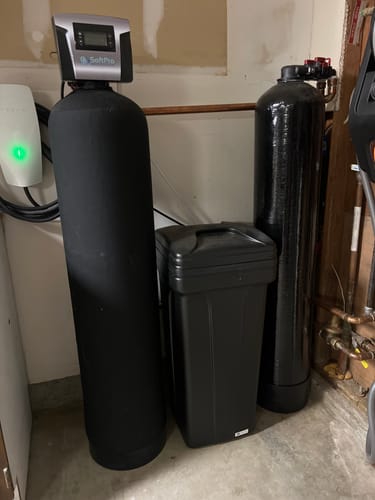
After three months of research, I realized that addressing our water quality required more than a basic whole house carbon filter. The combination of contaminants in Miami's supply demanded a multi-stage approach.
The catalytic carbon component caught my attention first.
Unlike standard granular activated carbon, catalytic carbon is specially treated to remove chloramines—those persistent disinfectant compounds that regular carbon can't handle effectively. This was crucial because Miami-Dade uses chloramines for secondary disinfection.
Bone char carbon, derived from animal bones heated to extremely high temperatures, offers unique properties for fluoride reduction. The calcium phosphate structure creates specific binding sites for fluoride molecules, something conventional carbon simply cannot achieve.
I compared this technology against reverse osmosis systems, which would remove fluoride but also strip beneficial minerals and waste significant amounts of water. For a family of four in Miami's climate, the water waste from RO seemed environmentally irresponsible.
Salt-free water conditioners were another consideration, but they don't address chemical contaminants—only scale prevention. Our issue wasn't hardness; it was chemical taste and health concerns.
The SoftPro system's upflow design also appealed to me. Traditional downflow filters can create channeling, where water finds the path of least resistance and bypasses much of the media. Upflow design ensures maximum contact time with both catalytic and bone char media.
The system's 10-year media life expectancy and backwashing capability meant lower long-term maintenance compared to cartridge-based systems that require frequent replacements.
Installation Experience and Initial Setup
The system arrived in two large boxes totaling about 180 pounds. The main tank measures 13 inches in diameter and 54 inches tall—larger than I anticipated but still manageable in our garage utility area.
SoftPro includes detailed installation diagrams, though I opted for professional installation given the complexity of integrating with our existing plumbing. The installer, certified by SoftPro, spent about four hours completing the job.
The installation required installing a bypass valve system, which I appreciated for future maintenance. The digital control head is surprisingly sophisticated, with LCD display showing regeneration cycles, flow rates, and system status.
Initial setup involved programming the system for our household size and water usage patterns. The installer configured it for our family of four, with backwash cycles every six days based on our average daily consumption of about 280 gallons.
The first backwash cycle ran that evening, lasting approximately 22 minutes. I was impressed by how quietly the system operates—barely noticeable from inside the house, even with our garage location adjacent to the living room.
Water pressure remained consistent throughout the house, measuring 52 PSI at our kitchen faucet compared to 55 PSI before installation. The minimal pressure drop exceeded my expectations.
The initial water taste improvement was immediate but not dramatic. The installer explained that full optimization occurs over the first week as the media bed settles and activates completely.
Real-World Performance After Six Months of Use

The transformation became apparent gradually, then suddenly obvious. Within two weeks, the metallic taste in our coffee disappeared entirely. I actually thought something was wrong with my espresso machine because the flavor profile changed so dramatically.
Sarah's skin irritation resolved completely within a month. She initially attributed the improvement to a new moisturizer, but when we traveled for a week and stayed in hotels, the dryness returned immediately. The correlation became undeniable.
Our dishwasher performance improved significantly. Those stubborn white spots on glassware vanished, and I reduced rinse aid usage by half while achieving better results.
I tested water quality monthly using a comprehensive kit measuring chlorine, chloramines, fluoride, and TDS levels. Incoming chlorine levels of 2.8 PPM dropped to undetectable levels post-filtration. Fluoride reduction averaged 85-90%, dropping from 0.7 mg/L to approximately 0.08 mg/L.
TDS levels decreased from 287 PPM to 195 PPM, indicating substantial contaminant removal while maintaining beneficial minerals. This balanced approach was exactly what I'd hoped to achieve.
The catalytic carbon's performance against chloramines impressed me most. These compounds are notoriously difficult to remove, yet post-filtration testing showed complete elimination of the chloramine odor and taste.
Water flow rates remained consistent even as the system accumulated filtered contaminants. The upflow design and automatic backwashing prevent the media compaction that plagues some filtration systems.
Unexpected benefits included improved plant health for our indoor garden. Plants receiving filtered water showed noticeably better growth and less leaf burn compared to neighbors using untreated municipal water.
Operating Costs and Maintenance Reality
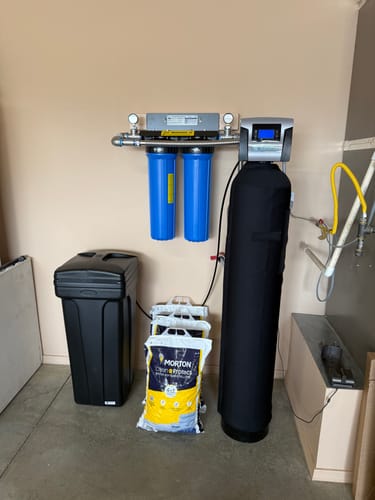
The system's operating costs have proven reasonable, though not insignificant. Backwash cycles consume approximately 150 gallons of water every six days, adding about $8 monthly to our water bill.
Electricity consumption for the digital control head and motor is minimal—roughly equivalent to a standard LED light bulb running continuously.
The biggest ongoing expense will be media replacement, required every 8-10 years according to SoftPro's specifications. Current replacement media costs approximately $400, which breaks down to about $3.50 monthly over the media's lifespan.
I've performed basic maintenance myself: checking the bypass valve quarterly, cleaning the venturi assembly annually, and monitoring the control head display for any error codes.
The digital controller tracks gallons processed and automatically adjusts backwash frequency based on actual usage rather than arbitrary time intervals. This efficiency feature has extended the time between regenerations during periods when we're traveling.
Annual operating costs total approximately $130, including increased water usage for backwashing and proportional media replacement reserves. Compared to bottled water costs for our family—previously about $60 monthly—the system pays for itself while providing superior convenience.
Professional servicing isn't required for routine maintenance, though SoftPro recommends annual inspections for systems in high-usage applications. For typical residential use, owner maintenance suffices.
Comparing Performance Against Alternatives
Having researched extensively before purchasing, I can compare this system's real-world performance against alternatives I considered seriously.
Point-of-use reverse osmosis systems I tested removed fluoride effectively but created several problems. The storage tank took up valuable under-sink space, flow rates were painfully slow for cooking needs, and the water tasted "flat" due to complete mineral removal.
Standard whole house carbon filters I evaluated couldn't address fluoride or chloramines effectively. While less expensive initially, they required frequent cartridge replacements and failed to solve our primary water quality concerns.
Multi-stage cartridge systems offered comprehensive filtration but at enormous ongoing costs. Replacement cartridge sets cost $180-240 every 6-12 months, making long-term ownership more expensive than the SoftPro system.
Ultraviolet sterilization systems eliminate biological contaminants effectively but don't address chemical issues we faced. UV would have been an additional expense on top of other filtration methods.
The bone char technology's fluoride reduction capabilities set this system apart from conventional approaches. Independent testing shows 85-95% fluoride reduction—performance typically achievable only through reverse osmosis or specialized alumina filters.
Catalytic carbon's chloramine removal exceeds standard activated carbon by orders of magnitude. This distinction becomes critical in municipalities using chloramines for secondary disinfection.
The system's 10-year media life compares favorably against cartridge-based alternatives requiring replacements every 6-12 months. This longevity significantly reduces long-term maintenance burden and costs.
Unexpected Benefits and Limitations
Six months of ownership revealed benefits I hadn't anticipated alongside some minor limitations worth discussing honestly.
Our washing machine performance improved noticeably. Clothes feel softer and colors remain vibrant longer without the chemical residues that previously accumulated in fabric fibers. I've reduced fabric softener usage significantly.
Soap and shampoo lather more effectively with filtered water, allowing us to use smaller quantities while achieving better results. This efficiency partially offsets the system's operating costs.
Ice cubes from our refrigerator dispenser now taste clean and remain crystal clear. Previously, they carried a slight chlorine taste and developed cloudiness after freezing.
The system's limitations became apparent during our heaviest usage periods. During holiday gatherings with extended family, simultaneous use of multiple fixtures occasionally triggered early backwash cycles.
Bone char's fluoride reduction, while excellent, isn't absolute. Sensitive individuals requiring complete fluoride elimination might need point-of-use reverse osmosis for drinking water supplementation.
The system requires adequate floor space and ceiling height for installation. Homes with cramped utility areas might struggle with the 54-inch tank height plus plumbing clearances.
Initial water waste during the first few backwash cycles was higher than expected as the media bed settled. This normalized after approximately two weeks of operation.
The digital control head, while feature-rich, takes some learning to navigate all programming options. The manual could provide clearer guidance for homeowner adjustments.
Final Verdict and Recommendations
After six months of daily use, this system has exceeded my expectations for water quality improvement while meeting my requirements for low-maintenance operation.
The combination of catalytic carbon and bone char technologies addresses a broader spectrum of contaminants than any single-media system I evaluated. For households concerned about both chloramines and fluoride, this dual-media approach offers unique advantages.
Installation quality and system reliability have been excellent. The digital control head hasn't displayed any error codes, and all automatic functions operate as programmed.
Value proposition depends significantly on your water quality priorities and current municipal supply characteristics. For areas with high chloramine and fluoride levels, the system's specialized capabilities justify the investment.
Who should seriously consider this system?
Families in municipalities using chloramines for disinfection will appreciate the catalytic carbon's superior removal capabilities. Standard carbon filtration simply cannot address these persistent compounds effectively.
Households with members sensitive to fluoride exposure—particularly those with thyroid conditions—benefit from the bone char technology's Fluoride Filter reduction capabilities without the drawbacks of whole house reverse osmosis.
Homeowners seeking long-term, low-maintenance filtration prefer the 10-year media life over cartridge-based systems requiring frequent service.
Who might consider alternatives?
Budget-conscious households primarily concerned with basic chlorine removal might find standard carbon filters sufficient for their needs.
Renters or those planning to move within 5-7 years might prefer portable or lease-friendly filtration options.
Homes with severe space constraints may struggle with the system's physical dimensions and installation requirements.
Six months in, I'm confident this system will continue providing excellent water quality improvement for years to come. The technology addresses real contaminant concerns effectively while maintaining the convenience and flow rates our family requires.
For our situation in Miami—dealing with chloramines, elevated fluoride, and general municipal water quality issues—this system hits the sweet spot between comprehensive filtration and practical long-term ownership.