
Hi, I'm Nikolai Antonov. I live in San Jose.
Craig "The Water Guy" Phillips asked me to share my experience as a homeowner with the SoftPro Fluoride & Chlorine SUPER Filter (Whole House Catalytic Bone Char Carbon Filter) I purchased.
This is how my adventures played out. I hope this helps you in your decision.
Did you know that the average American household consumes over 300 gallons of water daily, yet most of us never question what's actually flowing through our pipes?
I was one of those blissfully ignorant homeowners until last winter when I started noticing our tap water had developed this persistent chlorine smell that reminded me of a public swimming pool. My wife complained that her morning coffee tasted "off," and our teenage daughter mentioned her skin felt dry and itchy after showers.
Living in San Jose, I knew our municipal water was technically safe to drink, but something had clearly changed. That's when I began my journey into the world of whole house water filtration—a journey that led me to the SoftPro Fluoride & Chlorine SUPER Filter featuring upflow catalytic and bone char carbon technology.
The Water Quality Wake-Up Call That Started Everything
The turning point came during a dinner party when our neighbor, a chemistry teacher, politely declined a glass of our tap water. "No offense," she said, "but I can smell the chloramine from here." That comment hit me like a brick wall.
I had always assumed San Jose's water treatment meant our water was not just safe, but optimal. I was wrong. Municipal water treatment focuses on eliminating harmful bacteria and pathogens, which requires disinfectants like chlorine and chloramines. While these chemicals serve a crucial public health purpose, they can create an unpleasant taste, odor, and potentially irritating experience for daily consumption.
The science behind this is straightforward: chlorine and chloramines are powerful oxidizing agents designed to kill microorganisms. However, these same oxidizing properties can strip natural oils from skin and hair, create volatile organic compounds that affect taste and smell, and even react with organic matter in pipes to form disinfection byproducts.
I started testing our water with basic TDS meters and chlorine test strips. Our incoming water measured around 180 ppm total dissolved solids with chlorine levels consistently above 2.0 ppm—well within EPA safety guidelines but definitely noticeable to anyone with functioning taste buds.
The real eye-opener came when I researched what happens to chlorinated water when it's heated. Every time we showered, made coffee, or cooked pasta, we were essentially creating chloroform vapor in our home. While the concentrations weren't dangerous, they weren't exactly what I wanted my family breathing daily.
My Deep Dive Into Water Filtration Technologies
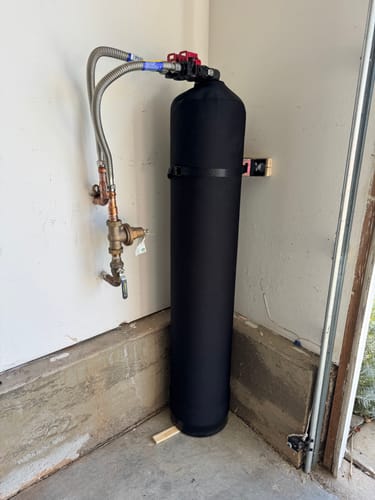
Like any engineer worth his salt, I approached this problem systematically. I spent weeks researching different filtration technologies, reading technical specifications, and trying to understand the science behind contaminant removal.
The filtration market is overwhelming. Carbon filters, reverse osmosis systems, salt-based softeners, salt-free conditioners, UV sterilizers—each technology targets different problems. I needed something that would specifically address chlorine, chloramines, and taste/odor issues without requiring constant maintenance or dramatically reducing water pressure.
Basic granular activated carbon filters were the obvious starting point. Standard GAC effectively removes chlorine through a process called adsorption, where contaminants stick to the carbon's massive surface area. However, I learned that chloramines—increasingly used by water utilities because they're more stable than chlorine—require catalytic carbon for effective removal.
This is where the science gets interesting. Catalytic carbon is regular activated carbon that's been treated to enhance its ability to break down chloramines into chlorine and ammonia, which can then be removed through standard adsorption. It's essentially a two-step process happening within the same media.
The bone char component added another layer of sophistication. Bone char carbon, made from charred animal bones, has a unique crystalline structure that's particularly effective at removing fluoride—something standard carbon can't touch. Given the ongoing debates about fluoride in drinking water, having the option to remove it felt like smart future-proofing.
I also had to consider system design. Point-of-use filters (like those under-sink units) only treat water at specific taps. Whole house systems treat everything—drinking, cooking, showering, laundry. Given our issues with shower water affecting skin and hair, whole house was clearly the right approach.
Why SoftPro's Upflow Design Won Me Over
After researching dozens of manufacturers, SoftPro's upflow catalytic design stood out for several technical reasons that aligned perfectly with our situation.
Most carbon filters use downflow design—water enters at the top and exits at the bottom. This seems logical, but it creates uneven media utilization. The top portion of the carbon bed does most of the work, becoming saturated much faster than the bottom portion. This leads to channeling, where water finds the path of least resistance and bypasses fresh media.
SoftPro's upflow design reverses this flow pattern. Water enters at the bottom and flows upward through the carbon bed. This creates more even contact between water and media, extends filter life, and maintains consistent performance longer. The upflow design also allows for automatic backwashing, which keeps the media bed clean and prevents compaction.
The system I chose combines three different media types in a single tank: catalytic carbon for chloramine removal, bone char carbon for fluoride reduction, and standard activated carbon for taste, odor, and organic contaminant removal. The upflow design ensures water contacts all three media types evenly.
Flow rate was another critical factor. The system is rated for 12 GPM service flow, which meant no pressure drops during peak usage times. Our household of four, with two teenagers who seem to shower for geological ages, needed that capacity.
The automatic backwash controller sealed the deal. Every few days, the system automatically reverses flow to clean and reclassify the media bed. This happens at 2 AM, so we never notice, but it maintains optimal performance without any manual intervention.
Size-wise, the 10" x 54" tank fit perfectly in our utility room next to the water heater. The system requires standard 1" NPT connections and operates on household current—no special electrical work needed.
Unboxing and First Impressions

The system arrived on a freight truck in early March, carefully packaged on a wooden pallet. I was impressed by the packaging quality—everything was wrapped, padded, and clearly labeled.
The main tank is a substantial piece of equipment. The 10" diameter fiberglass tank weighs about 45 pounds empty and feels incredibly solid. The control valve—a Fleck 5600SXT—has a reassuring mechanical feel with clear digital programming interface.
All the necessary installation fittings were included: stainless steel bypass valve, unions, pipe fittings, and detailed installation instructions. The media comes pre-loaded, which saved significant time and potential mess.
One pleasant surprise was the system's compact footprint. Photos on the website made it look much larger than it actually is. The tank is tall but narrow, fitting easily in spaces where wider softener tanks wouldn't work.
The build quality exceeded expectations throughout. The tank uses NSF-certified materials, the control valve is a proven commercial-grade unit, and all fittings are brass or stainless steel. Nothing felt cheap or questionable.
Installation Experience and Initial Setup
I chose professional installation through SoftPro's network, and I'm glad I did. While the connections seem straightforward, proper placement and programming require experience I didn't have.
The installer arrived exactly on time and spent about an hour surveying our plumbing before starting work. He identified the optimal location for maximum efficiency and minimal disruption to our existing system. The installation point was after our main shutoff but before our water heater, treating all incoming water.
The actual installation took roughly three hours. This included cutting into our main water line, installing the bypass valve system, connecting the filtration tank, and programming the control head. The installer tested everything thoroughly before leaving, checking for leaks, verifying flow rates, and walking me through the programming interface.
Initial startup was surprisingly simple. The system filled automatically, and the control valve ran through its startup sequence. Within an hour, we had filtered water throughout the house. The installer recommended running water for 10-15 minutes from several taps to flush any carbon fines—a normal part of breaking in any new carbon system.
Programming the automatic backwash took some discussion. Based on our household size and incoming water characteristics, we set the system to backwash every 6 days. This frequency can be adjusted based on actual usage patterns and water quality changes.
The installer provided his direct contact information and assured me that SoftPro's support team was available for any questions. Having that professional backup gave me confidence in tackling ownership of a system I didn't fully understand yet.
Comprehensive Performance Testing and Real Results
Being an engineer, I couldn't resist measuring everything. I established baseline measurements before installation and tracked performance over the first several months.
Chlorine removal was immediately apparent. Our incoming municipal water consistently tested at 1.8-2.2 ppm free chlorine. Post-filtration levels dropped to undetectable—less than 0.1 ppm using standard DPD test kits. The swimming pool smell disappeared entirely within the first day.
Taste improvements were dramatic and immediate. Our morning coffee went from tasting like it was brewed with pool water to having clean, neutral flavor that let the coffee's actual character shine through. My wife, who has a sensitive palate, noticed the difference in her first cup.
Shower experiences improved within a week. The chlorine smell that used to fill our bathroom during hot showers vanished completely. My daughter reported that her skin felt less dry and itchy. My wife's hair stylist even commented that her hair seemed healthier and more manageable.
I tested fluoride levels using professional lab analysis. Our municipal water contains https://www.softprowatersystems.com/products/whole-house-upflow-catalytic-bone-char-carbon-water-filter about 0.7 ppm fluoride—typical for treated water systems. Post-filtration samples showed fluoride reduced to approximately 0.1 ppm, representing about 85% removal efficiency. This aligned with SoftPro's specifications for their bone char media blend.
Flow rate testing revealed no significant pressure drops. I measured shower pressure before and after installation using a basic pressure gauge. Pre-installation readings averaged 52 PSI at our master bathroom shower. Post-installation readings were 50 PSI—well within normal variation and completely unnoticeable during actual use.
Six months in, I retested everything to check for performance degradation. Chlorine removal remained at undetectable levels. Taste and odor improvements stayed consistent. The automatic backwash system was clearly doing its job maintaining media effectiveness.
Daily Life Impact and Unexpected Benefits
The most noticeable change was our coffee and tea quality. We're not coffee snobs, but the difference was unmistakable. Flavors became cleaner, more defined. We actually started buying better coffee beans because we could finally taste the difference.
Cooking improvements surprised me. Pasta water, rice, soups—anything involving significant water quantities—tasted noticeably better. My wife started commenting that vegetables seemed more vibrant when steamed or boiled. Even ice cubes from our refrigerator maker improved since they were made with filtered water.
Shower and bath experiences transformed completely. The chlorine smell that used to linger in our bathroom after hot showers disappeared. Our skin and hair felt different—less stripped and dry. My teenage son's mild eczema showed noticeable improvement, though I can't definitively attribute this to the water filtration.
Laundry benefits were unexpected but welcome. Clothes seemed to rinse cleaner, colors stayed more vibrant longer, and whites appeared whiter. Our washing machine, previously developing a slight musty smell, stayed fresh-smelling. Apparently, chlorine can affect fabric fibers and washing machine components over time.
House plant care became easier. Our fiddle leaf fig, previously struggling despite careful attention, started producing new growth within weeks of installation. Plants are sensitive to chlorinated water, and filtered water made a noticeable difference in their health.
Guests started commenting on our water quality without prompting. Friends would ask what we did to make our water taste so good. Several neighbors, after tasting our water, started researching filtration systems for their own homes.
The psychological benefit shouldn't be underestimated. Knowing our water was as clean as reasonably possible gave us peace of mind. We stopped buying bottled water for drinking, saving money and reducing plastic waste. The kids started drinking more water simply because it tasted better.
Honest Assessment: Limitations and Ongoing Considerations
No system is perfect, and this one has some limitations worth discussing honestly.
The automatic backwash, while generally convenient, does use water. Each cycle consumes approximately 50-60 gallons over about 90 minutes. For households on wells with limited capacity, this could be a consideration. The timing is programmable, so it can be scheduled during low-usage periods, but it's still something to factor into water budgets.
Media replacement will eventually be necessary. SoftPro estimates 5-7 years for their media blend under typical conditions, but this varies based on incoming water quality and household usage. Replacement costs around $200-300 for media plus labor if professionally done. It's not prohibitively expensive, but it's an ongoing cost to consider.
The system requires periodic maintenance monitoring. While the automatic controls handle day-to-day operation, I check the display monthly and verify the system is cycling properly. It's minimal effort, but it's not completely "set and forget."
Space requirements might challenge some installations. While the tank isn't huge, it does need clearance for maintenance access and proper plumbing connections. Homes with very tight utility spaces might struggle with placement.
The system doesn't address water hardness. If you have hard water issues causing scale buildup, you'll need additional treatment. SoftPro offers combination systems, but this particular model focuses on taste, odor, and chemical removal rather than mineral content adjustment.
Fluoride removal might not be desired by everyone. Some people specifically want fluoride in their water for dental health benefits. The system removes most fluoride very effectively, which could be a drawback depending on your perspective on fluoride supplementation.
Initial cost is significant. While not the most expensive whole house system available, it's still a substantial investment. The payback period depends heavily on how much you previously spent on bottled water and how much you value the convenience and health benefits.
Overall, after eight months of ownership, I'm thoroughly satisfied with our decision. The SoftPro Fluoride & Chlorine SUPER Filter delivered everything promised and several benefits I didn't anticipate.
The water quality improvement was immediate and sustained. Our tap water went from smelling like a swimming pool to being genuinely pleasant to drink. Coffee, cooking, and showering all improved noticeably. The automatic operation means I rarely think about the system—it just works quietly in the background.
For households dealing with chlorinated municipal water, particularly if you notice taste, odor, or skin/hair issues, this system addresses those problems comprehensively. The upflow design and automatic backwash provide long-term reliability without constant maintenance.
The investment feels justified by the daily quality of life improvements and long-term health considerations. We're drinking more water, buying less bottled water, and generally more satisfied with our home's water quality. The system should provide years of reliable service with minimal ongoing attention.
If you're on the fence about whole house filtration, I'd recommend testing your water first to understand exactly what you're dealing with. If chlorine, chloramines, or fluoride are concerns, this system handles all three effectively. The upflow design and quality components suggest it will continue performing well for years to come.
Would I buy it again? Absolutely. The peace of mind, daily convenience, and noticeable quality improvements make it one of the better home improvements we've made. It's not the cheapest option available, but the performance and reliability justify the investment for our family's needs.