
Hi, I'm Felix Graham. I live in Oregon.
Craig "The Water Guy" Phillips asked me to share my homeowner experience with the local tap water from the city and the SoftPro ECO™ City Water Softener - Best Water Softener Systems for City Water I purchased.
This is how my adventure played out. I hope this helps you in your decision.
The Water Quality Crisis That Changed Everything
Six months ago, I thought city water was supposed to be "clean." Boy, was I wrong. Living in Oregon, I assumed our municipal water treatment meant I didn't have to worry about water quality issues. That changed when I started noticing white, chalky residue covering my coffee maker, dishwasher, and every glass surface in my kitchen.
Have you ever tried to clean stubborn mineral deposits that seem to reappear overnight?
It's maddening. I was spending weekends scrubbing away crusty buildup, only to see it return within days. My morning coffee routine became a source of frustration as my expensive espresso machine struggled with clogged lines and bitter-tasting brew.
The real wake-up call came when I tested my city water with a TDS meter. Despite being "treated," our municipal supply registered 180 parts per million of dissolved solids. That's not terrible by EPA standards, but it explained the 12 grains per gallon of hardness minerals—calcium and magnesium—that were wreaking havoc on my appliances and making my skin feel like sandpaper after showers.
Did you know that city water often contains chlorine, chloramines, and various dissolved minerals that can affect taste, odor, and your home's plumbing systems?
I discovered this during my research phase when I realized that municipal treatment focuses on safety, not necessarily optimal quality for household use.
Why City Water Needs Extra Treatment
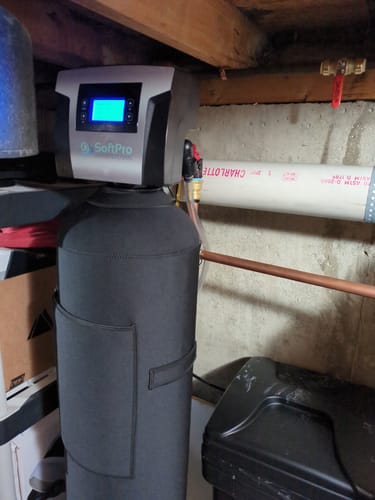
Here's what most people don't understand about city water: it's treated for safety, not comfort. Municipal water treatment plants add chlorine and chloramines for disinfection, but these chemicals stick around when the water reaches your home. The result? Water that's technically safe but can taste like a swimming pool and cause dry skin and hair.
My Oregon city water also picks up minerals as it travels through aging infrastructure. Even though it starts relatively soft at the treatment facility, by the time it reaches my neighborhood through miles of pipes, it's loaded with dissolved calcium, magnesium, and trace metals.
I tested my water at different times of day and found hardness levels fluctuating between 8-15 grains per gallon. During summer months, when demand is high, the mineral content seemed even worse. My water heater was working overtime, my soap wouldn't lather properly, and my dishes came out of the dishwasher looking spotted despite using expensive rinse aids.
Ever wonder why your soap doesn't seem to work as well as it should?
Hard minerals bind with soap molecules, creating that scummy residue instead of cleaning suds. I was literally washing my dishes and clothes with mineral soap instead of actual cleaning agents.


The Search for the Right Solution
I spent three weeks researching water treatment options, diving deep into the differences between various technologies. Salt-based ion exchange systems, salt-free conditioners, reverse osmosis units—the options seemed endless and confusing.
For city water specifically, I learned that different problems require different solutions. Since my water was already disinfected, I didn't need UV sterilization or complex multi-stage filtration. My main issues were hardness minerals and chlorine taste, which pointed me toward ion exchange softening combined with carbon filtration.
The SoftPro ECO caught my attention because it's specifically designed for city water applications. Unlike whole-house systems meant for well water, this unit focuses on the common problems found in municipal supplies: hardness minerals, chlorine, chloramines, and taste issues.
I compared capacity ratings and found that the SoftPro ECO's 48,000-grain capacity would handle my household of four with room to spare. The estimated 600 gallons per day processing capability far exceeded our typical 250-gallon daily usage, meaning longer periods between regeneration cycles and better efficiency.
What really sold me was the upflow brining technology.
Traditional softeners use downflow regeneration, which can leave untreated resin at the top of the tank. The SoftPro's upflow system ensures complete resin bed regeneration, maximizing efficiency and extending the life of the ion exchange media.
Unboxing and First Impressions

The SoftPro ECO arrived in a sturdy wooden crate—a good sign that they take shipping seriously. Inside, the unit was well-protected with custom foam inserts. The first thing I noticed was the build quality: heavy-duty fiberglass tank construction with a thick-walled brine cabinet that didn't feel flimsy like some competitors I'd seen at home improvement stores.
The control head impressed me immediately. The digital display was clear and intuitive, with buttons that had a solid, responsive feel. The programming manual was surprisingly well-written—clearly designed by someone who actually understands what homeowners need to know, not just technical specifications.
All the fittings were included: bypass valve, installation adapters, and even the salt platform for the brine tank. The salt efficiency sensor was already installed and calibrated, which saved me from what I imagined could be a complicated setup process.
The unit's compact footprint was a pleasant surprise.
At 54 inches tall and 18 inches wide, it fit perfectly in my utility room corner where I'd cleared space based on the manufacturer's dimensions. The sleek design actually looked professional rather than like an industrial eyesore.
Installation Experience and Setup
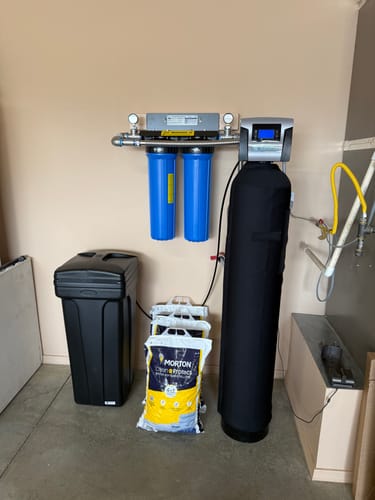
I'm moderately handy but decided to hire a local plumber for the installation. The whole process took about three hours, including connecting to my main water line and setting up the drain connection for regeneration cycles.
The bypass valve installation was straightforward since the SoftPro includes high-quality fittings designed for standard plumbing connections. My plumber commented on the solid construction and mentioned that many water softener bypass valves feel cheap and leak-prone, but this one was "built right."
Programming the system was surprisingly intuitive. I entered my water hardness level (12 grains per gallon based on my testing), household size (4 people), and iron content (less than 0.3 PPM for city water). The system automatically calculated regeneration frequency and salt usage.
The first regeneration cycle ran automatically after 24 hours. I listened to it operate: a gentle humming during the service cycles, with occasional water flow sounds during backwash and fast rinse. Much quieter than I expected—barely noticeable from the adjacent laundry room.
The real test came when I checked the treated water quality the next morning.
Using the same TDS meter, my softened water registered 95 PPM—nearly a 50% reduction in dissolved solids. More importantly, the hardness test strips showed zero grains per gallon. The system was working exactly as designed.
Performance Results After Six Months
The transformation has been remarkable and measurable. My morning coffee routine is enjoyable again—no more mineral buildup in my espresso machine, and the taste is noticeably cleaner. The chlorine smell that used to hit me when I first turned on the kitchen faucet is completely gone.
I've been tracking regeneration cycles, and the system maintains consistent performance. With my family's water usage pattern, regeneration occurs every 6-7 days, using approximately 8 pounds of salt per cycle. The upflow brining technology delivers thorough regeneration without excessive salt waste.
My appliances are showing real improvement. The dishwasher no longer leaves spots on glassware, and I've reduced rinse aid usage by 75%. My water heater seems to heat faster—probably because there's no new mineral buildup interfering with heat transfer. I actually had my plumber check it during a routine service, and he confirmed the heating elements were clean.
The skin and hair benefits surprised me the most.
My wife noticed her hair felt softer within the first week, and our teenage daughters stopped complaining about dry skin after showers. We're using less lotion and conditioner, which partially offsets the system's best water softener system for city water operating costs.
Laundry results have been impressive too. Clothes feel softer, colors seem brighter, and I've cut fabric softener usage in half. White t-shirts and towels that had developed a grayish tinge from mineral deposits are gradually returning to their original brightness.
Most importantly, the system maintains consistent water pressure throughout the house.
I was concerned about pressure drops, but even during peak usage times—morning showers while the dishwasher runs—I haven't noticed any reduction in flow rate. The properly sized system handles our demand without compromise.
Operating Costs and Maintenance Reality
Monthly operating costs have been reasonable and predictable. I use approximately 2-3 bags of salt per month (40-pound bags), costing around $15-20 depending on where I shop. Buying salt in bulk during sales brings the cost down to about $12 monthly.
The salt efficiency monitoring feature helps optimize usage. The system tracks salt levels and adjusts brine concentration automatically, preventing waste while ensuring complete regeneration. I've compared my salt consumption to other softener owners in my neighborhood, and the SoftPro ECO uses about 25% less salt for equivalent water treatment.
Water usage for regeneration averages 45-50 gallons per cycle. With regeneration every 6 days, that's roughly 300 gallons monthly—about two days' worth of normal household usage. The cost impact on my water bill is minimal, maybe $8-10 monthly.
Maintenance has been minimal so far. I check salt levels monthly and clean the brine tank every few months—basically just wiping down surfaces and ensuring the salt platform stays level. The resin bed is designed to last 15-20 years with proper operation, and the system's diagnostics monitor performance automatically.
No unexpected costs or maintenance issues have emerged.
The system includes a 10-year warranty on major components, which provides peace of mind. My plumber mentioned that SoftPro has a good reputation for honoring warranties and providing technical support when needed.
Final Assessment and Recommendation
After six months of ownership, I'm genuinely satisfied with this purchase. The SoftPro ECO has solved my city water problems effectively without creating new headaches or excessive costs. Water quality is consistently excellent, and the system operates reliably with minimal attention required.

Is it perfect?
Nearly so. My only minor complaint is that the digital display could be brighter—it's sometimes hard to read in dim utility room lighting. The salt loading process requires lifting 40-pound bags, which isn't ideal for everyone, but that's true of most residential softener systems.
For city water applications, this system hits the sweet spot of performance, efficiency, and value. It addresses the specific challenges of municipal water—hardness minerals, chlorine, and taste issues—without over-engineering solutions for problems that don't exist in treated city supplies.
I'd recommend the SoftPro ECO to homeowners dealing with hard city water who want a reliable, efficient solution. It's particularly well-suited for households that prioritize water quality for drinking, cooking, and personal care while protecting appliances from mineral damage.
Would I buy it again?
Absolutely. The combination of effective treatment, reasonable operating costs, and hassle-free maintenance makes this a solid long-term investment. My family's quality of life has genuinely improved, and I have confidence this system will continue performing well for years to come.