
Hi, I'm Cobalt M. I live in Wisconsin. Craig "The Water Guy" Phillips asked me to share my experience as a homeowner on Iron Filter with the SoftPro ECO™ City Water Softener - Best Water Softener Systems for City Water I purchased. This is how my adventures played out. I hope this helps you in your decision.
Why I Needed a Water Softener: The Hard Water Reality
Did you know that Wisconsin has some of the hardest water in the country?
I certainly learned this the hard way. After moving into our home three years ago, I started noticing problems that I initially dismissed as normal wear and tear. My coffee maker developed a thick, crusty buildup that no amount of scrubbing could remove. Our glassware came out of the dishwasher with stubborn white spots that made everything look perpetually dirty. But the real wake-up call came when my wife started complaining about her skin feeling tight and itchy after every shower.
The municipal water report showed our hardness levels at 18 grains per gallon – well into the "very hard" category. Those calcium and magnesium minerals were wreaking havoc on our daily lives. I calculated that we were spending an extra $30 monthly on soap and detergent, trying to combat the effects. Our water heater efficiency was declining, and I dreaded thinking about the long-term damage to our appliances.
I knew I needed a solution that could handle our family of four's daily water usage while being efficient enough to keep operational costs reasonable. The research phase began, and after comparing various technologies, I kept coming back to the SoftPro ECO system.
Research Journey: Why I Chose the SoftPro ECO
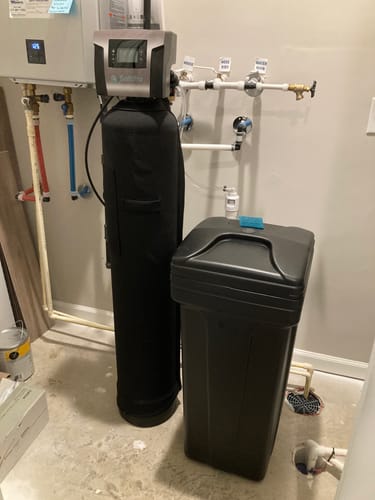
I spent weeks diving deep into water softener technologies, reading everything from NSF certifications to user experiences on various forums. The ion exchange process made the most sense for our situation – we needed something that would actually remove the hardness minerals, not just change how they behaved in our pipes.
What drew me to the SoftPro ECO was its upflow regeneration design. Unlike traditional downflow systems that can create channeling in the resin bed, the upflow method ensures even distribution and more efficient regeneration. This translates to less salt usage and better long-term performance – factors that matter when you're looking at years of operational costs.
The demand-initiated regeneration was another selling point. Instead of running regeneration cycles on a timer regardless of actual usage, the SoftPro ECO monitors water consumption and only regenerates when needed. For a household that travels frequently, this efficiency could save significant money on salt and water usage.
I also appreciated that it met NSF/ANSI 44 standards for water softening systems. This certification ensures the unit actually performs as advertised and doesn't add unwanted contaminants to our water supply.
Unboxing and Initial Impressions
The SoftPro ECO arrived in excellent condition, with packaging that clearly showed attention to protecting the components during shipping. The main unit felt substantial – you could tell this wasn't a budget system by the weight and build quality. The mineral tank used a high-strength fiberglass construction rather than the plastic I'd seen on some competitors.
Opening the boxes revealed everything needed for installation: the mineral tank, brine tank, control head, bypass valve, and comprehensive installation manual. The documentation was refreshingly clear, with actual diagrams rather than generic illustrations. I particularly appreciated the troubleshooting section and the detailed specifications for plumbing connections.
One thing that struck me immediately was the compact footprint. At 10 inches in diameter, the mineral tank fit comfortably in our utility room without overwhelming the space. The brine tank, while larger, had a sleek design that didn't look like industrial best water softener equipment in our basement.
Installation Experience and the Resin Challenge

Here's where I need to be completely honest about the installation process. While the SoftPro ECO is marketed as DIY-friendly, I encountered one significant challenge that nearly made me call a professional: adding the resin was not easy.
The installation manual makes the resin filling process look straightforward – simply pour the resin beads into the mineral tank through the opening. In reality, this proved much more difficult than anticipated. The resin beads are small and have a tendency to stick to surfaces, especially in humid conditions. What should have been a 15-minute task turned into an hour of careful work.
The challenge comes from the need to avoid getting resin beads into the control head mechanism while ensuring complete filling of the tank. I found that using a funnel wasn't sufficient – the beads would clump and create air pockets. After some trial and error, I discovered that adding the resin in smaller batches while gently tapping the tank sides helped settle the beads properly.
The rest of the installation went smoothly. The bypass valve installation required cutting into the main water line, which I approached carefully with proper shutoff procedures. The control head mounted easily, and the electrical connection was straightforward with standard household current.
Total installation time was about four hours, with two of those hours dedicated to getting the resin properly settled. Once everything was connected and I initiated the first regeneration cycle, the system performed exactly as expected.
Daily Performance and Water Quality Transformation
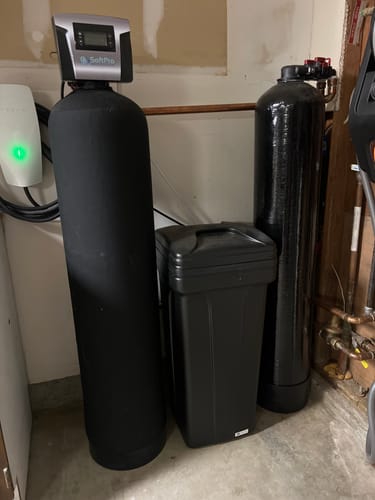
The difference in water quality became apparent within 24 hours of installation. The first shower felt noticeably different – water felt "slippery" in the way that soft water should. My wife immediately commented on how much better her skin felt, and we both noticed that soap and shampoo seemed to lather more easily.
In the kitchen, the transformation was dramatic. Coffee tasted cleaner and brighter, without the mineral undertones we'd grown accustomed to. Dishes came out of the dishwasher spotless for the first time since we'd lived in the house. I tested the water hardness with a TDS meter and confirmed the system was reducing hardness from 18 grains per gallon to less than 1 grain per gallon.
The demand-initiated regeneration has worked flawlessly over eight months of use. The system typically regenerates every 4-5 days with our normal usage patterns, consuming approximately 6 pounds of salt per cycle. This matches the manufacturer's efficiency claims and represents a significant improvement over our neighbor's timer-based system that regenerates twice weekly regardless of usage.
One unexpected benefit was the improvement in our water heater's performance. The heating elements no longer have mineral buildup, and we've noticed faster recovery times when multiple people shower consecutively. Our energy bills show a modest but measurable decrease in water heating costs.
Operational Costs and Maintenance Reality
After eight months of ownership, I can provide real-world cost data that potential buyers will find valuable. Salt consumption averages 25 pounds monthly, costing approximately $8-12 depending on the salt type. I've found that solar salt crystals work well and are more economical than pellets for our system.
The upflow regeneration design has proven its efficiency claims. Compared to my neighbor's traditional downflow system of similar capacity, the SoftPro ECO uses about 30% less salt and 25% less water during regeneration. Over a year, this translates to roughly $40-50 in savings – not dramatic, but meaningful over the system's lifespan.
Maintenance has been minimal. Monthly tasks include checking salt levels and occasionally cleaning the brine tank. The system's self-cleaning features handle most maintenance automatically. I've had no service calls or component failures, and the control head display provides clear information about system status and upcoming regeneration cycles.

Water consumption monitoring shows we're processing about 280 gallons daily on average. The system handles peak demand periods without any noticeable pressure drop or performance degradation. Even during high-usage days (laundry, multiple showers, dishwasher), soft water quality remains consistent.
Honest Assessment: What Works and What Doesn't
After eight months of daily use, I can provide an honest assessment of where the SoftPro ECO excels and where it falls short. The system delivers on its primary promise – consistently soft water with efficient operation. The build quality has impressed me, with no signs of wear or performance degradation.
The demand-initiated regeneration works exactly as advertised, providing significant efficiency advantages over timer-based systems. Salt usage remains predictable and economical, and the upflow design appears to maintain resin bed integrity better than traditional methods.
However, I must emphasize that the resin filling process during installation remains a legitimate concern. This isn't a minor inconvenience – it's genuinely difficult to do properly without making a mess or potentially damaging components. Future buyers should either budget for professional installation or prepare for a challenging DIY experience.
The control head interface could be more intuitive. While functional, programming regeneration schedules and adjusting settings requires frequent reference to the manual. It's not complicated once you understand it, but it's not immediately user-friendly either.
Space requirements are reasonable but worth considering. While compact compared to some systems, you still need adequate clearance around the brine tank for salt loading and occasional maintenance access.
Final Verdict: Is the SoftPro ECO Worth It?
Despite the installation challenges, I'm genuinely satisfied with the SoftPro ECO's performance. The water quality improvement has exceeded expectations, and the operational efficiency has proven its value over nearly a year of use. Our household has experienced measurable benefits in everything from personal comfort to appliance longevity.
Would I buy this system again?
Yes, but I'd seriously consider professional installation to avoid the resin filling hassle. The performance, build quality, and efficiency justify the investment for homes with genuinely hard water.
This system is ideal for households dealing with moderate to severe hardness levels who want proven ion exchange technology with modern efficiency features. The demand-initiated regeneration and upflow design provide real advantages over basic timer-controlled systems.

For DIY enthusiasts willing to tackle the resin installation challenge, the SoftPro ECO offers professional-grade performance at a reasonable price point. Just budget extra time for installation and consider having professional backup available if needed.
After eight months of soft water, I can't imagine going back to our previous hard water situation. The daily quality-of-life improvements alone justify the investment, and the long-term appliance protection provides additional peace of mind.