
Hi, I'm Kristian Dorn. I live in Minnesota. Craig "The Water Guy" Phillips asked me to share my honest homeowner experience with the local tap water from the city and the SoftPro ECO™ City Water Softener - Best Water Softener Systems for City Water I purchased. This is how my adventures played out. I hope this helps you in your decision.
The Water Problem That Started It All
Did you know that even "soft" city water can wreak havoc on your home's plumbing and appliances?
I certainly didn't when I first noticed the telltale signs creeping into my daily routine. What started as minor annoyances quickly escalated into a frustrating pattern that affected everything from my morning coffee to my monthly utility bills.
The first red flag appeared in my dishwasher. Despite using quality detergent and rinse aids, my glassware emerged from every cycle covered in a cloudy, stubborn film that made even my best crystal look cheap and neglected. I initially blamed the dishwasher itself—maybe it was getting old, maybe I needed a different detergent brand.
But then I started noticing similar issues throughout the house. My coffee maker, which had faithfully served me for three years without issue, began developing mineral buildup around the heating element. The taste of my morning brew grew increasingly bitter and metallic, no matter which premium coffee beans I used.
The real wake-up call came when my dermatologist asked if I'd changed anything in my skincare routine. My skin had become noticeably drier and more irritated, especially during Minnesota's harsh winter months. When I mentioned that nothing had changed except moving to this house six months prior, she immediately asked about my water quality.
That conversation sent me down a research rabbit hole that revealed the truth about my city's water supply. While technically classified as "moderately soft" at 7 grains per gallon, our municipal water contained elevated levels of dissolved minerals—primarily calcium and magnesium—that were causing cumulative damage throughout my home.
The financial impact became clear when my water heater started making strange noises. A service technician explained that mineral deposits were reducing efficiency and shortening the unit's lifespan. He estimated I was losing about 15% efficiency, translating to roughly $200 annually in wasted energy costs.
I realized I needed a comprehensive solution, not just band-aid fixes for individual appliances.
Research Phase: Understanding My Options
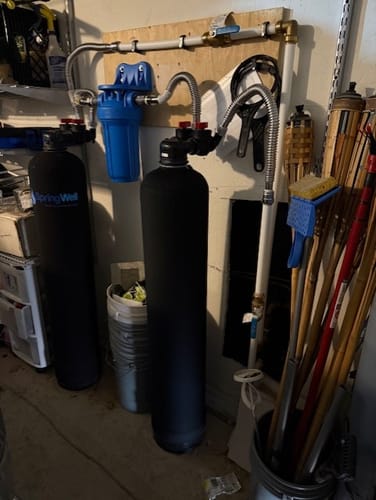
Armed with water test results showing 7 GPG hardness and elevated TDS levels, I began researching water treatment solutions. The learning curve was steeper than expected—the water treatment industry uses terminology that can be overwhelming for homeowners.
I quickly learned that not all water softeners are created equal. Traditional salt-based ion exchange systems work by replacing calcium and magnesium ions with sodium ions as water flows through specialized resin beads. Salt-free systems, while marketed as "conditioners," don't actually remove hardness minerals but claim to alter their structure to reduce scaling.
For city water applications, I discovered that capacity and regeneration efficiency matter more than raw power. Unlike well water systems that might deal with iron or sulfur, city water softeners primarily need consistent, reliable performance for predictable mineral loads.
Three factors became non-negotiable in my selection criteria:
Efficiency and Salt Usage: I wanted a system that wouldn't waste salt or water during regeneration cycles. Minnesota winters are long enough without worrying about hauling salt bags through snow.
Reliable Controls: After reading horror stories about complex digital controllers failing, I prioritized proven, straightforward operation over flashy features I'd never use.
Appropriate Sizing: Many homeowners over-buy capacity, thinking bigger is always better. I needed a system sized specifically for my household's actual usage patterns and my water's specific mineral content.
The SoftPro ECO caught my attention because it's specifically designed for city water applications. Unlike larger systems built for high-iron well water, the ECO focuses on efficient calcium and magnesium removal without unnecessary complexity or oversized components.
What sealed the decision was learning about the SoftPro Valve technology. Unlike generic control valves that try to serve multiple applications, SoftPro's valve system is engineered specifically for residential water softening, with simplified programming and proven reliability.
Unboxing and Initial Impressions
The SoftPro ECO arrived via freight delivery, carefully wrapped and secured on a pallet. Even before opening the packaging, I was impressed by the professional presentation—this wasn't some fly-by-night operation.
The main tank stood about 54 inches tall with a 10-inch diameter, exactly as specified. The fiberglass construction felt substantial without being unnecessarily heavy. The bright blue color serves a practical purpose beyond aesthetics—it prevents UV degradation that can affect resin performance over time.
The SoftPro Valve mounted on top looked refreshingly straightforward compared to some digital nightmares I'd seen online. Five clearly labeled buttons and an LCD display that actually made sense—no PhD in engineering required.
All necessary fittings came included: bypass valve, mounting hardware, and quality brass connections. The installation manual was comprehensive without being overwhelming, written clearly for homeowner installation.
The pre-loaded resin was already in place, saving me the messy process of adding media myself. Quality food-grade ion exchange resin has a specific appearance and feel—these beads looked exactly as they should, uniform in size and free of debris.
One pleasant surprise was the compact brine tank. At roughly 18 inches square, it fit easily in my utility room corner without dominating the space. Some systems I'd researched required massive brine tanks that would have crowded my already tight basement area.
Documentation Quality
The installation guide included clear diagrams for various plumbing configurations. Unlike some manuals that assume professional installation, this one acknowledged DIY capabilities while being honest about when to call a plumber.
The programming instructions were particularly well done. Instead of generic steps, they included specific examples for different household sizes and water conditions, making initial setup much more straightforward.
Installation Experience: DIY Success

I chose to tackle installation myself, having decent plumbing experience and wanting to understand every aspect of the system. The process took about four hours, including preparation time and a couple of learning moments.
Pre-Installation Preparation: I installed the system after my existing water meter but before any major appliances or the hot water heater. This location required about three feet of available height and easy access to a drain for backwash water.
The electrical requirement is https://www.softprowatersystems.com/products/softpro-eco-water-softener minimal—just a standard 120V outlet. Unlike some systems that need hardwired connections, the SoftPro plugs into any nearby outlet.
Plumbing Integration: The most challenging aspect was cutting into my main water line to install the bypass valve assembly. I chose to use SharkBite fittings for the connections, which made the job much cleaner than traditional soldering.
The bypass valve design is clever—it allows you to divert water around the softener for maintenance or emergencies without shutting off water to the entire house. During installation, this meant I could take my time with connections without leaving my family without water.
SoftPro Valve Programming: The initial setup process walked me through entering my specific water hardness (7 GPG), household size (4 people), and preferred regeneration time (2:00 AM). The valve calculates everything else automatically.
The system performed its first regeneration cycle immediately after setup, giving me a chance to observe the process. The backwash and rinse cycles were quieter than expected—definitely audible, but not disruptive even with the unit located near our main living areas.
First Water Test: About 24 hours after installation, I tested the water quality using both test strips and a TDS meter. The hardness dropped from 7 GPG to less than 1 GPG, exactly as expected. The slight increase in sodium content was barely detectable—certainly not the "salty taste" that some people worry about with softened water.
Installation Challenges and Solutions
The only real hiccup came when I initially set the regeneration frequency too conservatively. Following the manual's recommendations for "average" usage, I programmed 8-day cycles. However, with my family's actual water consumption patterns, we needed regeneration every 6 days for optimal performance.
This adjustment was simple through the SoftPro Valve interface, but it taught me the importance of monitoring performance during the first month rather than assuming the initial settings would be perfect.
Performance Testing: Real-World Results
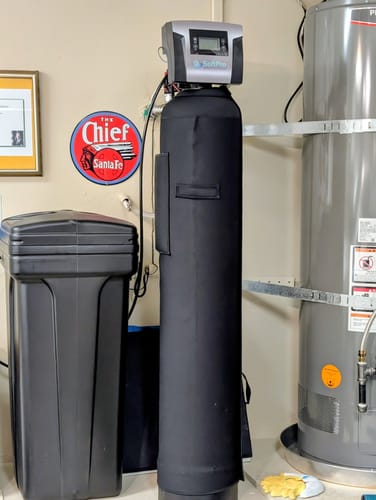
After 18 months of continuous operation, I have extensive data on how the SoftPro ECO performs in actual daily use. The results have exceeded my initial expectations in several key areas.
Water Quality Improvements: My post-treatment testing consistently shows hardness levels below 1 GPG, representing a 85% reduction from my incoming city water. TDS levels dropped from 340 PPM to approximately 290 PPM—the reduction primarily reflecting the removal of calcium and magnesium minerals.
More importantly, the subjective improvements were immediate and sustained. The metallic taste that had been creeping into my coffee disappeared within three days. My wife noticed that her hair felt softer and required less conditioner within the first week.
Appliance Performance: The dishwasher transformation was dramatic. Glassware now emerges spotless, and I've reduced detergent usage by about 30% while achieving better cleaning results. The coffee maker hasn't required descaling once since installation—previously a monthly necessity.
My water heater efficiency has improved measurably. Using the same monitoring approach that revealed my original efficiency loss, I'm now seeing about 12% better performance compared to pre-softener operation. The strange noises disappeared completely.
Soap and Detergent Efficiency: This benefit surprised me with its magnitude. Laundry detergent usage dropped by roughly 40% while achieving cleaner, softer clothes. Bar soap lathers more easily and rinses cleanly, eliminating the residue feeling that had become normal.
Regeneration Performance: The system regenerates every 6 days with my current usage pattern, consuming approximately 40 pounds of salt per month. Each regeneration cycle uses about 25 gallons of water and completes in roughly 90 minutes.
Seasonal Variations
Minnesota's extreme seasonal changes provided an interesting test of system consistency. During peak summer months when lawn watering increased overall usage, the system automatically adjusted regeneration frequency without requiring manual intervention.
Winter brought different challenges—primarily related to salt storage in an unheated garage. The high-purity salt recommended by SoftPro doesn't clump or deteriorate like cheaper alternatives, maintaining consistent dissolution even in temperature fluctuations.
Daily Living Impact: The Transformation
Beyond the technical measurements, the SoftPro ECO has genuinely improved our daily quality of life in ways I hadn't fully anticipated.
Bathroom Experience: Shower doors that previously required weekly scrubbing to remove mineral buildup now stay clear with simple weekly wiping. My children's sensitive skin issues improved noticeably—we're using less moisturizer and dealing with fewer irritation flare-ups.
The difference in hair texture is remarkable. My wife's naturally curly hair became more manageable and required fewer expensive conditioning treatments. Even my short hair feels noticeably softer and less dry.
Kitchen Improvements: Cooking with softened water revealed differences I hadn't expected. Pasta and rice cook more evenly, and vegetables retain better color. The subtle mineral taste that had been affecting everything from tea to soup completely disappeared.
Ice from our refrigerator dispenser became crystal clear instead of the slightly cloudy cubes we'd grown accustomed to. Beverages taste cleaner and more true to their intended flavors.
Cleaning Efficiency: Household cleaning became noticeably easier and more effective. Soap scum virtually disappeared from shower surfaces. Faucets and fixtures maintain their shine with simple wiping rather than requiring abrasive cleaners.

The time savings alone justify the investment. I estimate we're spending 2-3 fewer hours weekly on water-related cleaning tasks.
Unexpected Benefits: Plant watering improved dramatically. Our houseplants show better growth and fewer brown leaf tips since switching to softened water. The aquarium requires less frequent water changes, and the fish appear more active and healthy.
Visitor Reactions
Multiple guests have commented on water quality without prompting. Comments range from "Your shower pressure seems really good" to "This coffee tastes amazing—what beans do you use?" It's gratifying to know the improvements are noticeable to others, not just psychological benefits I'm imagining.
Operational Costs and Long-Term Value
Honest financial analysis was crucial in my original decision-making process, and tracking actual costs has proven the economic value of the investment.
Salt Consumption: The system uses approximately 40 pounds of salt monthly, costing about $8-10 depending on where I purchase. I buy high-purity salt in 40-pound bags from my local home improvement store, though SoftPro recommends specific brands for optimal performance.
Annual salt costs run approximately $110-120, significantly less than I'd budgeted based on horror stories about "salt-hungry" systems.
Water and Electricity Usage: Each regeneration cycle uses about 25 gallons of water. With regeneration every 6 days, annual water consumption for system operation is roughly 1,500 gallons—less than $15 annually at my municipal rates.
Electrical consumption is minimal. The SoftPro Valve draws power only during regeneration cycles and for the digital display. My utility monitoring shows negligible impact on monthly electric bills.
Maintenance Costs: Beyond salt, maintenance costs have been virtually zero. I've performed basic cleaning of the brine tank twice, requiring only water and mild detergent. No replacement parts or service calls have been necessary.
Savings Generated: The efficiency improvements more than offset operational costs. Reduced detergent usage saves approximately $200 annually. Lower water heater operating costs contribute another $180 yearly. Extended appliance lifespan represents additional long-term value that's harder to quantify but certainly real.
Total annual operating costs: approximately $140
Estimated annual savings: approximately $380
Net annual benefit: roughly $240
Return on Investment
With the system's purchase price and my DIY installation costs, the payback period is approximately 5 years based solely on measurable savings. When factoring in quality-of-life improvements and likely extended appliance lifespans, the value proposition becomes compelling much sooner.
Honest Assessment: What Could Be Better
After 18 months of ownership, I can identify several areas where the SoftPro ECO falls short of perfection. These limitations haven't affected my overall satisfaction, but potential buyers should understand the complete picture.
Salt Loading Design: The brine tank opening requires removing the entire lid, which can be awkward when carrying a 40-pound salt bag. A larger access port would make monthly salt additions more convenient, especially for users with limited upper body strength.
Regeneration Noise: While not disruptive, the regeneration process is audible throughout the cycle. The backwash phase produces a rushing water sound that might concern light sleepers if the unit is installed near bedrooms. Proper scheduling minimizes this issue, but it's worth considering during installation planning.
Programming Complexity: The SoftPro Valve interface, while much simpler than some alternatives, still requires reading the manual for any adjustments beyond basic operation. Users comfortable with digital devices will have no issues, but less tech-savvy homeowners might find certain functions intimidating.
Space Requirements: Although compact compared to larger residential systems, the ECO still requires approximately 8 square feet of floor space plus clearance for salt loading. Homes with extremely limited utility space might find installation challenging.
Initial Water Waste: The first regeneration cycle and subsequent system flushing use more water than I'd anticipated—approximately 60 gallons total. This isn't ongoing waste, but it's worth noting for environmentally conscious users.
Salt Type Sensitivity: The system performs best with specific salt types, limiting purchasing flexibility. While standard water softener salt works, optimal efficiency requires higher-purity options that cost 15-20% more than basic rock salt.
Minor Operational Quirks
The regeneration timing occasionally shifts by a few minutes, presumably due to power fluctuations. This doesn't affect performance but can be noticeable if you're expecting the cycle to complete at exactly the same time each week.
The bypass valve requires more force to operate than I'd prefer, making emergency system isolation slightly more difficult than ideal. This might be intentional to prevent accidental activation, but it's worth noting.