
Hi, I'm Randy W.. I live in Wisconsin.
Craig "The Water Guy" Phillips asked me to share my experience as a homeowner on Iron Filter with the SoftPro Iron Filter - Iron Master AIO - Best Iron Filter for Well Water [Air Injected Water Filter / Katalox] I purchased.
This is how my adventures played out. I hope this helps you in your decision.
Did you know that iron contamination affects over 25 million Americans who rely on well water for their homes?
I certainly didn't realize how widespread this problem was until I found myself dealing with rusty, metallic-tasting water that was leaving orange stains on everything it touched. Living here in Wisconsin, I thought clear well water was just a given - boy, was I wrong.
After months of frustration watching my white laundry turn orange and scrubbing iron stains from my toilet bowls, I knew I had to find a solution. The Iron Master AIO from SoftPro promised to tackle my iron problems head-on, but I'll be honest - I was skeptical after trying other "solutions" that barely made a dent.
What I discovered over the past eight months of using this system has completely transformed not just my water quality, but my entire approach to household maintenance and daily living.
The Iron Problem That Was Ruining My Home
Before I dive into my experience with the Iron Master, let me paint you a picture of what I was dealing with. Our well water tested at 4.2 PPM of iron - not the worst I'd heard of, but definitely enough to cause serious problems throughout our house.
Every morning, I'd wake up to rusty water in the toilet bowls. My wife's white blouses were gradually turning a dingy orange color, despite using expensive detergents and stain removers. The worst part was the taste - that metallic, almost bitter flavor that made drinking tap water absolutely unpalatable.
But what really drove me to take action was what I discovered about the long-term effects.
The iron wasn't just staining our fixtures and ruining our clothes. It was building up in our water heater, reducing its efficiency and shortening its lifespan. Our dishwasher was developing a reddish film on the interior, and even our ice cubes had an off-putting taste that guests definitely noticed.
I learned that iron in well water typically comes in two forms: ferrous (dissolved) and ferric (particulate). Our water had primarily ferrous iron, which appears clear when it first comes out of the tap but oxidizes and turns orange when exposed to air. This explained why our water looked fine initially but left those stubborn stains everywhere.
The bacterial iron was another concern I hadn't considered. Iron bacteria thrive in iron-rich environments and can create biofilm in pipes and water systems. While not necessarily harmful to health, these bacteria produce that characteristic musty, swampy smell that I'd occasionally notice from our taps.
Research Phase: Understanding My Options
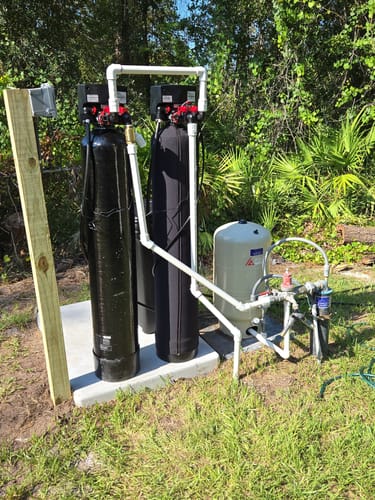
I spent nearly two months researching iron filtration systems before making my decision. The sheer number of options was overwhelming - traditional water softeners, oxidizing filters, air injection systems, and various media types like birm, greensand, and katalox.
Initially, I considered adding iron removal to our existing water softener, but I learned that while softeners can handle small amounts of iron, they're not designed for levels like ours. The iron would coat the resin beads and reduce the softener's effectiveness over time.
What caught my attention about the Iron Master AIO was its air injection system combined with katalox media.
The air injection process works by introducing oxygen into the water stream, which oxidizes ferrous iron into ferric iron. This oxidized iron can then be filtered out by the katalox media. Unlike traditional systems that require chemical oxidizers like potassium permanganate, this system uses just air and backwashing to maintain itself.
Click to find out more
Katalox Light, I learned, is a relatively new filtration media that's incredibly efficient at removing iron, manganese, and hydrogen sulfide. It's a manufactured media with a much higher surface area than natural alternatives like greensand, which means better contact time and more effective filtration.
The "All-In-One" designation meant that the air injection, oxidation chamber, and filtration all happened in a single tank. This was appealing because it would save space in our utility room and reduce the complexity of the installation.
What really sold me was the system's ability to handle up to 15 PPM of iron - well above our 4.2 PPM level - and its relatively low maintenance requirements compared to chemical feed systems.
Unboxing and First Impressions
The Iron Master arrived on a Thursday morning in early March, shipped on a pallet via freight delivery. I was impressed by the packaging quality - everything was securely wrapped and protected, with clear labeling on each component.
The main filter tank is substantial - a 10" x 54" fiberglass vessel that feels incredibly solid. The Fleck 2510SXT control head looked professional and well-manufactured, with clearly labeled connections and a digital display that was already showing basic system information.
Opening the various boxes revealed everything I needed for installation: bypass valve assembly, tank fittings, air injection venturi, and all the necessary plumbing connections.
The installation manual was thorough - 24 pages of detailed instructions with clear diagrams. I particularly appreciated that it included troubleshooting sections and maintenance schedules, showing that SoftPro was thinking beyond just the initial sale.
The build quality immediately stood out. The control valve had a reassuring weight to it, and all the fittings were high-quality brass and stainless steel. Even the air injection venturi was a robust piece of equipment, not the cheap plastic component I'd seen on some competitors.
One small concern was the size - even though I'd checked the dimensions, seeing the tank in person made me realize I'd need to rearrange our utility room more than I'd anticipated. The 54-inch height meant it barely fit under our basement ceiling joists.
Installation Experience and Setup Process

I decided to tackle the installation myself, though SoftPro does offer professional installation in some areas. With basic plumbing skills and the right tools, it turned out to be more straightforward than I'd expected, though it definitely took a full Saturday to complete properly.
The first step was installing the bypass valve assembly on my main water line. This required shutting off water to the house and cutting into the existing copper piping. The bypass valve is crucial because it allows you to route water around the filter during maintenance or if issues arise.
The air injection venturi installation was the most technically interesting part.
This small device creates a vacuum that draws air into the water stream before it enters the filter tank. Getting the orientation correct was critical - the venturi has to be installed with the proper flow direction, and there's a specific air inlet tube that needs to be positioned above the water level.
Connecting the control head to the tank required careful attention to the distributor tube inside the tank. This tube ensures that water flows down through the katalox media bed properly and that backwash water is distributed evenly. The O-ring seals had to be perfectly positioned to prevent any bypass around the media.
Programming the Fleck control head took about 30 minutes of working through the manual. The system needs to know your water hardness, iron levels, and household water usage to calculate proper backwash frequency. I set it for a backwash every three days initially, though I later adjusted this based on actual performance.
The initial startup process involves slowly filling the tank and checking for leaks at every connection. Then comes the first backwash cycle, which runs for about 12 minutes and uses approximately 80 gallons of water to properly bed the katalox media and remove any fines.
Total installation time was about 6 hours, including the https://www.softprowatersystems.com/products/iron-master-iron-filter-for-well-water learning curve and double-checking every connection. A professional plumber could probably complete it in half that time.
Performance Testing and Real-World Results
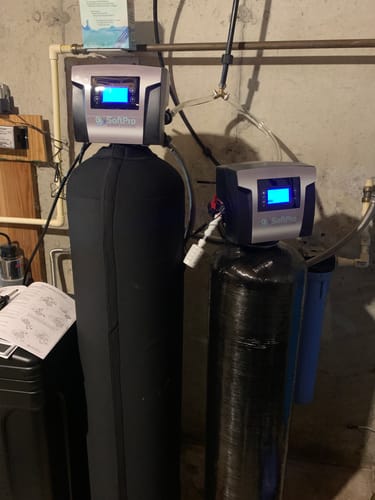
The first thing I noticed after the system came online was the immediate difference in water clarity and taste. Even before running any tests, the metallic flavor was completely gone, and the water had a clean, fresh taste that we hadn't experienced in years.
I tested the water quality using both test strips and a digital TDS meter before and after installation. Pre-filtration, our iron levels measured 4.2 PPM, with noticeable levels of manganese and hydrogen sulfide as well. The pH was slightly acidic at 6.8.
Post-filtration results were impressive: iron levels dropped to less than 0.1 PPM, manganese was virtually eliminated, and the sulfur smell disappeared completely.
What surprised me was the improvement in overall water quality beyond just iron removal. The katalox media also addressed the manganese issues I didn't realize we had, eliminating the slight black staining that had been appearing around our faucets.
Over the following weeks, I documented the changes throughout our home. The toilet bowls stayed white between cleanings. Our washing machine stopped leaving any hint of discoloration on clothes. Ice cubes became crystal clear instead of the slightly cloudy appearance they'd had before.
I measured the system's flow rate at various points around the house and found virtually no pressure drop during normal usage. Even during peak demand times - like when the dishwasher and washing machine were running simultaneously - we maintained adequate pressure at all fixtures.
The air injection system proved particularly effective. You can actually hear the air being drawn into the system during operation, and occasionally see small air bubbles in the water for the first few seconds after turning on a faucet. This is normal and indicates the oxidation process is working properly.
After three months of operation, I had the water professionally tested again. The results confirmed what we were experiencing daily - iron levels consistently below detectable limits, with excellent overall water quality that met or exceeded municipal water standards.
Daily Living Impact and Long-Term Benefits
The transformation in our daily routines has been remarkable. My wife no longer has to pre-treat every load of white laundry, and our household cleaning time has decreased significantly since we're not constantly scrubbing iron stains.
Our morning coffee tastes noticeably better - so much so that we've actually reduced the amount of coffee we use because the flavor is more pronounced without the metallic interference. Cooking has improved too, particularly when making rice, pasta, or anything that requires a lot of water.
The financial benefits have been substantial as well.
We've eliminated the need for bottled water, saving about $40 per month. Iron stain removers, special detergents, and extra cleaning products are no longer necessary. Most importantly, we're protecting our appliances from iron buildup that was shortening their lifespans.
Our dishwasher's interior looks like new again, and our water heater is running more efficiently without iron deposits forming on the heating elements. I've noticed lower energy bills, which I attribute to the water heater not having to work as hard to heat clean water.
Guests consistently comment on the water quality now. Several neighbors have asked what we did to improve our water after tasting the difference during visits. It's become a point of pride rather than embarrassment.
The shower experience has improved dramatically. Without iron interference, soap and shampoo lather better and rinse cleaner. My wife's hair feels softer, and we've both noticed our skin feels less dry after bathing.
Seasonal variations haven't affected the system's performance. During spring runoff when our well water typically gets more turbid, the Iron Master has maintained consistent filtration effectiveness without requiring any adjustments.
Maintenance Reality and Operational Costs
One of my primary concerns before purchasing was the ongoing maintenance requirements and costs. After eight months of ownership, I can say the maintenance is much simpler than I anticipated.
The system automatically backwashes every three days, using approximately 80 gallons of water per cycle. This happens at 2 AM, so it doesn't interfere with our daily water usage. The backwash sends iron-laden water down the drain, regenerating the katalox media for continued effectiveness.
The only regular maintenance I perform is checking the air inlet tube monthly to ensure it's not blocked.
This takes literally 30 seconds and involves making sure the small tube that draws air into the venturi is clear of debris or insects. I also visually inspect the bypass valve and connections for any signs of leaks.
Every six months, I test the water quality to ensure the system is performing optimally. These test kits cost about $15 and give me confidence that everything is working as intended. So far, results have been consistently excellent.
The katalox media is designed to last 8-10 years under normal conditions. At our iron levels and water usage, SoftPro estimates we'll get closer to 10 years before replacement is needed. When that time comes, the media replacement cost is approximately $400-500, which works out to about $4-5 per month over the media's lifespan.
Electricity consumption is minimal - the control head uses about 3 watts continuously, similar to a small LED light bulb. Water usage for backwashing adds about $15 per month to our water bill, but this is more than offset by the savings on bottled water and cleaning products.
I track the total operational cost at approximately $25-30 per month when factoring in water usage, electricity, and media replacement reserves. Compared to our previous spending on bottled water, iron stain removers, and premature appliance replacements, this represents significant savings.
Final Assessment and Honest Recommendation
After eight months of daily use, I can confidently say the Iron Master AIO has exceeded my expectations in every meaningful way. The installation was manageable for someone with basic DIY skills, the performance has been consistently excellent, and the maintenance requirements are minimal.
Is it perfect? Almost, but not quite.
The system is larger than I initially anticipated, which required rearranging our utility room. The backwash cycles use a significant amount of water, which might be a concern if you're on a private septic system or in an area with water restrictions. The initial investment is substantial - not a decision to make lightly.
However, for homeowners dealing with iron levels between 2-10 PPM, this system provides professional-grade filtration without the complexity of chemical feed systems. The air injection technology is proven, reliable, and eliminates the need to handle oxidizing chemicals.
The build quality inspires confidence for long-term reliability. SoftPro's customer support has been responsive the few times I've contacted them with technical questions. The warranty coverage is comprehensive, and the company seems committed to supporting their products long-term.
Would I purchase this system again knowing what I know now?
Absolutely. The improvement in our daily quality of life, combined with the appliance protection and cost savings, makes this one of the best home improvements we've made. Our water quality now rivals or exceeds most municipal supplies, and we have the peace of mind that comes with controlling our own treatment process.
For homeowners struggling with iron contamination in their well water, the Iron Master AIO represents a serious, long-term solution that delivers on its promises. It's an investment in your home's infrastructure that pays dividends every single day.