
Hi, I'm Daniel W.. I live in Texas.
Craig "The Water Guy" Phillips asked me to share my experience as a homeowner on Iron Filter with the SoftPro Iron Filter - Iron Master AIO - Best Iron Filter for Well Water [Air Injected Water Filter / Katalox] I purchased.
This is how my adventures played out. I hope this helps you in your decision.
Did you know that over 25% of American households rely on well water, and iron contamination affects nearly 40% of those wells?
Living in rural Texas, I thought rusty orange stains on everything were just part of well water life. My white clothes turned amber after a few washes, my toilet bowls looked perpetually dirty despite constant scrubbing, and that metallic taste in my morning coffee had become so normal I barely noticed it anymore.
For three years, I dealt with these issues thinking they were unfixable without spending a fortune. I tried everything from liquid iron removers to expensive bottled water for drinking and cooking. Nothing worked long-term, and the costs kept adding up.
Then a neighbor mentioned his new iron filtration system, and I realized I'd been approaching this all wrong. Instead of managing the symptoms, I needed to address the root cause. That's when I discovered the SoftPro Iron Master AIO system and decided to take the plunge.
The Iron Problem That Drove Me to Search for Solutions
Let me paint you a picture of what my daily life looked like before installing this system. Every morning, I'd turn on the bathroom faucet and watch orange-tinted water flow out for the first few seconds. The metallic smell hit me immediately – that distinct iron odor that makes you wrinkle your nose.
My biggest frustration was the laundry situation. I'd wash white shirts three times, using expensive stain removers, only to hang them up with permanent yellow-orange discoloration. My wife stopped buying light-colored clothing altogether because we knew it was a waste of money.
The kitchen wasn't any better. Ice cubes from our refrigerator had an orange tint, and guests would politely decline second glasses of water. I started keeping cases of bottled water just for drinking and coffee preparation. The irony wasn't lost on me – I had my own well but was buying water from the store.
But the real wake-up call came when our plumber pointed out iron buildup in our water heater during routine maintenance.
He explained that iron doesn't just stain things – it actually damages plumbing fixtures, reduces appliance efficiency, and can clog aerators and showerheads over time. I was looking at expensive repairs and replacements if I didn't address this properly.
I tested our well water using a home testing kit and discovered we had 4.2 parts per million (PPM) of iron. The EPA's secondary standard recommends no more than 0.3 PPM for aesthetic reasons, so we were more than 13 times over the recommended level. That explained everything.
My Research Journey: Why I Chose the Iron Master System
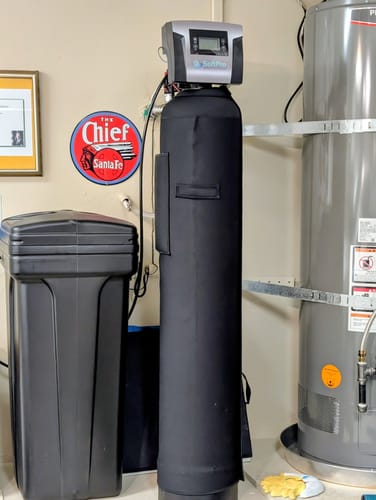
Once I understood the scope of our iron problem, I dove deep into research. I spent weeks reading about different iron removal technologies, comparing systems, and trying to understand the science behind iron filtration.
I learned that our well water contained primarily ferrous iron – the dissolved form that's invisible until it oxidizes upon contact with air. That's why our water looked clear coming out of faucets but turned orange when sitting in the toilet bowl or when I filled a white bucket.
The research revealed three main approaches to iron removal: salt-based water softeners, chemical feed systems, and air injection oxidation filters. Each had pros and cons, but the air injection method appealed to me because it doesn't require ongoing chemical purchases or salt deliveries.
The SoftPro Iron Master AIO caught my attention because it combines air injection technology with Katalox media – a specialized filtration material that's particularly effective for iron removal. The system essentially injects air into the water, converting dissolved ferrous iron into oxidized ferric iron, which then gets trapped by the Katalox media during filtration.
What sealed the deal was the system's ability to handle our specific iron levels without requiring additional equipment or chemicals.
Many systems I researched needed pre-oxidation tanks or chemical injection pumps for iron levels above 3 PPM. The Iron Master was rated to handle up to 15 PPM of iron with its standard configuration.
Delivery and First Impressions: Quality You Can Feel
The ordering process was straightforward, and I appreciated the detailed sizing questionnaire that helped ensure I got the right capacity for our household. The system arrived in about a week via freight delivery – this isn't something that shows up in a UPS box.
Unboxing revealed impressive build quality. The main tank stands about 54 inches tall with a 10-inch diameter, housed in a heavy-duty fiberglass shell. The control valve on top looked robust and well-engineered, with clear markings and solid construction.
What impressed me most was the comprehensive installation manual and water testing kit included with the system. The documentation wasn't just technically accurate – it was written in plain English that a homeowner could actually understand and follow.
The Katalox media was pre-loaded, which saved time and potential mess during installation. I'd read horror stories about other systems requiring manual media loading that could go wrong in multiple ways.
Installation Experience: Easier Than Expected

I'll be honest – I was intimidated by the installation initially. This isn't changing a faucet aerator; it's plumbing a whole-house filtration system into your main water line. But the detailed instructions and included components made the process much more manageable than expected.
The system required installation at the point where our main water line enters the house, before it splits to feed different fixtures. I needed to cut the main line and install bypass valves, which meant temporarily shutting off water to the entire house.
**The most challenging part was ensuring proper spacing and alignment.**
The system needs clearance above the tank for media replacement and around the control valve for service access. I had to relocate some storage shelves in our utility room to accommodate the unit properly.
Installation took me about four hours total, including the time spent double-checking connections and testing for leaks. The system includes all necessary fittings and bypass valves, though I did need to purchase some additional PVC pipe and fittings from the hardware store to complete the integration with our existing plumbing.
Initial startup was straightforward. The control valve runs an automatic initialization cycle, and I could hear the air injection pump cycling on and off as designed. The first few glasses of water had a slight taste change – not unpleasant, just different from what we were used to.
Performance Testing: Real Numbers and Real Results
I'm the type of person who likes to measure things rather than just guess, so I tracked our iron levels carefully before and after installation. Using test strips and a digital TDS meter, I documented the changes over the first month of operation.
**Baseline measurements (pre-installation):**
- Iron content: 4.2 PPM
- TDS (Total Dissolved Solids): 340 PPM
- pH: 6.8
- Noticeable metallic taste and odor
**Results after one week:**
- Iron content: 0.1 PPM
- TDS: 320 PPM
- pH: 7.1
- No detectable metallic taste or odor
The improvement was dramatic and immediate. More importantly, it stayed consistent. I've been testing monthly for six months now, and the iron levels remain below 0.2 PPM even as our well water iron content fluctuates seasonally.
But the real proof was in daily life changes that you can't measure with test strips.
Within two weeks, I noticed our toilet bowls staying white after cleaning. Laundry came out looking properly clean for the first time in years. The ice maker in our refrigerator started producing crystal-clear cubes instead of the orange-tinted ones we'd grown accustomed to.
Coffee and tea tasted noticeably better – cleaner and more like what I expected from the brands we were using. My wife commented that her hair felt softer after washing, likely because iron wasn't building up on the strands anymore.
Long-Term Ownership: Six Months Later
The honeymoon period with any home improvement can fade quickly when reality sets in. Six months of ownership has given me a realistic perspective on both the benefits and the ongoing requirements of this system.
**The good news: performance has remained consistent.** Iron removal effectiveness hasn't degraded, and we haven't experienced any breakthrough events where iron whole house water filter iron levels suddenly spiked in our treated water.
Maintenance has been minimal but important. The system runs an automatic backwash cycle every three days, which I can hear but isn't disruptive. This process flushes accumulated iron particles from the Katalox media and regenerates the air injection system.
I've learned to monitor the air injection pump, which cycles on for about 30 seconds every hour during normal operation. When I first noticed this cycling, I worried something was wrong, but the manual explained this is normal operation to maintain proper dissolved oxygen levels for iron oxidation.
**The only maintenance I've performed is checking and adjusting the system pressure quarterly.**
The control valve has a pressure gauge that should read between 20-40 PSI when the system is operating. I've had to add a small amount of air twice using a standard bicycle pump – a 30-second task.
Operating costs have been lower than expected. The system adds about $8-12 to our monthly electric bill based on my calculations, primarily from the air injection pump and the periodic backwash cycles that use our well pump.
Cost Analysis: Investment vs. Ongoing Savings
Let me break down the real financial picture because this was a significant purchase decision for our household. The Iron Master system cost $1,847 delivered, plus about $200 in additional plumbing supplies and fittings for installation.
**Before the system, our iron-related expenses included:**
- Bottled water for drinking/cooking: $35/month
- Specialty laundry additives and stain removers: $25/month
- Replacement of stained clothing and linens: $40/month average
- Extra cleaning supplies for bathroom fixtures: $15/month
That's roughly $115 monthly in costs directly attributable to our iron problem, not counting the time spent on extra cleaning and laundry rewashing.
**Current operating costs:**
- Electricity for system operation: $10/month
- No ongoing consumables or chemicals needed
- Minimal maintenance requirements
Based on these numbers, the system pays for itself in about 18 months, not including the value of time savings and improved quality of life. We're already seeing reduced cleaning time and haven't had to replace stained items since installation.
The biggest financial benefit has been protecting our appliances and plumbing fixtures from iron damage.
Our water heater, dishwasher, and washing machine should last longer without constant iron exposure. When our neighbor replaced his iron-damaged water heater last month ($1,200 job), it reinforced the value of proactive treatment.
Final Verdict: Would I Buy This Again
After six months of ownership, I can confidently say this system solved our iron problem completely and has exceeded my expectations for reliability and performance. The installation was manageable for a moderately handy homeowner, and ongoing maintenance has been minimal.
What I appreciate most is the "set it and forget it" nature of the system.
Unlike chemical feed systems that require ongoing monitoring and supply purchases, or salt-based softeners that need regular salt additions, the Iron Master operates automatically with minimal intervention.
The air injection technology appeals to me because it doesn't add anything to our water – it just removes what shouldn't be there in the first place. Our water tastes clean and natural, not processed or artificially treated.
If I were starting this process over, I'd make the same choice. The combination of effective iron removal, reasonable operating costs, and low maintenance requirements makes this an excellent value for households dealing with significant iron contamination.
**My only regret is waiting three years to address this problem.**
The improvement in daily life quality – from better-tasting water to cleaner laundry to reduced maintenance chores – has been worth every penny of the investment.
For homeowners dealing with iron levels above 2-3 PPM, especially those tired of managing symptoms rather than solving the underlying problem, https://www.softprowatersystems.com/collections/iron-well-water-filters I'd recommend seriously considering this system. It's not the cheapest option available, but it's proven to be effective, reliable, and cost-efficient over time.