
Hi, I'm Deborah H.. I live in Utah. Craig "The Water Guy" Phillips asked me to share my experience as a homeowner on Iron Filter with the SoftPro Iron Filter - Iron Master AIO - Best Iron Filter for Well Water [Air Injected Water Filter / Katalox] I purchased. This is how my adventures played out. I hope this helps you in your decision.
Did you know that iron contamination affects over 25% of private well water systems across the United States?
After dealing with rusty, metallic-tasting water for three years in our Utah home, I finally decided enough was enough. The reddish stains in our sinks, the metallic taste in our morning coffee, and the constant worry about what this iron-laden water was doing to our appliances pushed me to find a real solution. What I discovered through my research journey and subsequent experience with the Iron Master AIO completely transformed our household water quality in ways I hadn't even anticipated.The Iron Problem That Drove Me to Search for Solutions
Living on well water in rural Utah came with challenges I never expected when we first moved here. Our water test results showed iron levels at 4.2 parts per million – nearly three times the EPA's secondary standard of 0.3 PPM. This wasn't just a cosmetic issue affecting taste and appearance.
Every morning, I'd find rust-colored stains creeping up the sides of our white porcelain sinks. Our once-pristine toilet bowls developed permanent orange rings that no amount of scrubbing could eliminate. But the real wake-up call came when our six-month-old dishwasher started leaving rusty spots on our glassware, and our white laundry began taking on a dingy, yellowish tinge.
The iron in our water existed primarily in the ferrous state – dissolved iron that's invisible to the naked eye until it contacts oxygen and oxidizes into visible ferric iron. This explained why our water looked crystal clear coming from the tap but developed that telltale metallic taste and gradually turned cloudy when left standing.
Beyond the aesthetic issues, I was concerned about the long-term impact on our plumbing system. Iron bacteria thrives in environments with high iron content, potentially creating biofilm buildup in pipes and water heaters. Our water heater was already showing signs of reduced efficiency, requiring more frequent maintenance and producing water with increasingly noticeable sediment.
Previous attempts at managing the problem included point-of-use filters for drinking water and increased cleaning product usage, but these were Band-Aid solutions that didn't address the root cause. The monthly cost of replacement cartridges for our under-sink filter alone was approaching $40, and we were still dealing with iron contamination throughout the rest of our plumbing system.
Research Journey: Understanding Iron Filtration Technologies
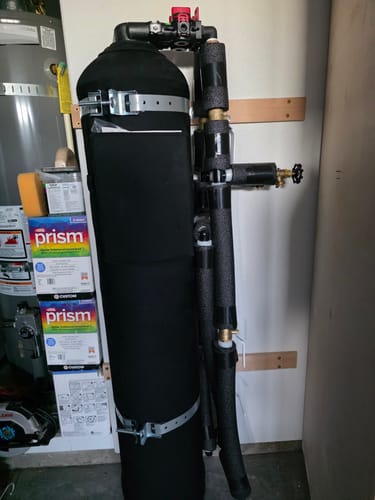
My research into iron filtration revealed several distinct approaches, each with specific applications depending on iron type, concentration levels, and water chemistry. Understanding these differences became crucial in making an informed decision.
Traditional sediment filters only capture ferric iron – the oxidized, visible particles – but do nothing for dissolved ferrous iron. This explained why our existing point-of-use filters provided minimal improvement. Water softeners can remove small amounts of ferrous iron through ion exchange, but they become overwhelmed and fouled when iron levels exceed 1-2 PPM.
Air injection systems emerged as the most promising technology for our situation. These systems introduce compressed air into the water stream, converting dissolved ferrous iron into oxidized ferric iron particles that can then be filtered out mechanically. The process mimics natural oxidation but accelerates it dramatically, ensuring complete conversion before filtration.
The Katalox filtration media particularly caught my attention during research. This manufactured media combines the oxidation capabilities of manganese dioxide with superior filtration properties, handling both iron and manganese removal in a single step. Unlike traditional greensand filters that require potassium permanganate regeneration, Katalox systems regenerate with simple backwashing.
Sizing calculations for our household of four indicated we needed a system capable of handling 8-10 gallons per minute flow rate while maintaining adequate contact time for complete iron oxidation. The Iron Master AIO's specifications showed 12 GPM capacity with the 1054 tank size, providing the headroom we needed for peak demand periods.
NSF certification became another critical factor in my evaluation. The Iron Master AIO holds NSF/ANSI Standard 61 certification for drinking water components, ensuring all materials meet strict health and safety standards for potable water contact.
Why the Iron Master AIO Won My Decision
Several factors converged to make the Iron Master AIO the clear choice for our specific situation and requirements.
The all-in-one design eliminated the complexity and potential failure points of multi-tank systems. Traditional air injection setups often require separate air chambers, compressors, and control valves, creating multiple components that need maintenance and can malfunction. The Iron Master integrates everything into a single tank with one control head.
Flow rate capacity exceeded our peak demand calculations while maintaining the 4-6 minute contact time necessary for complete iron oxidation. Many competitors either sacrificed flow rate or contact time, but the Iron Master's design achieved both through optimized media bed depth and air injection timing.
The Katalox media offered superior performance compared to traditional greensand or birm media options. Katalox handles higher iron concentrations, requires less maintenance, and provides longer media life. The self-cleaning properties meant simpler regeneration cycles without chemical additives.
Installation requirements aligned with our existing plumbing configuration. The system needed 110V electrical connection, drain access within 20 feet, and standard 1-inch plumbing connections – all readily available in our utility room location.
Warranty coverage provided five years on the tank and two years on the control valve, indicating manufacturer confidence in build quality and longevity. Many competitive systems offered only 1-2 year warranties or excluded tank coverage entirely.
The bypass valve inclusion meant we could isolate the system for maintenance without interrupting household water service – a feature that proved invaluable during initial setup and testing phases.
Unboxing and Initial Assessment

The Iron Master AIO arrived via freight delivery in excellent condition, packaged in a custom wooden crate that protected the tank and components during shipping. The total weight surprised me – approximately 180 pounds when fully assembled – indicating substantial build quality but requiring careful planning for installation positioning.
Opening the packaging revealed the main tank assembly with pre-installed control head, bypass valve kit with stainless steel connections, installation manual with clear diagrams, and startup chemical packet for initial system conditioning. Everything felt solid and well-manufactured, from the fiberglass tank construction to the brass fittings.
The Clack WS1 control valve impressed me immediately with its digital display and intuitive programming interface. Unlike mechanical timer systems that require manual adjustment for regeneration scheduling, the WS1 uses demand-initiated regeneration based on actual water usage, optimizing efficiency and media life.
The tank itself measured 10 inches in diameter by 54 inches in height – compact enough for our utility room but substantial enough to handle our household's water demands. The fiberglass construction provided excellent chemical resistance and structural integrity compared to cheaper plastic alternatives.
Documentation quality exceeded expectations, with clear installation diagrams, detailed programming instructions, and troubleshooting guides. The manual addressed common installation scenarios and provided specific guidance for different plumbing configurations.
Installation Experience and Initial Setup
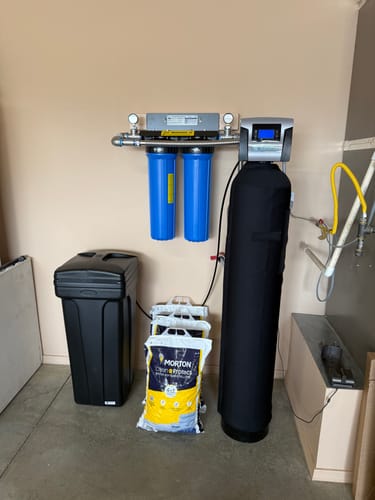
Installation took approximately four hours, including time for careful planning and double-checking connections. While I'm comfortable with basic plumbing tasks, I decided to hire a local plumber for the final connections to ensure warranty compliance and proper system startup.
Pre-installation preparation involved identifying the optimal location in our utility room with access to electrical, drain, and main water line. The system required 36 inches of clearance above the tank for media service access and 12 inches on all sides for plumbing connections.
The bypass valve installation proved straightforward with the included unions and gate valves. This three-valve configuration allows complete system isolation for maintenance while maintaining household water service through the bypass line. Proper bypass installation became crucial during the initial programming and testing phases.
Electrical connection required a dedicated 110V circuit with ground fault protection, standard for water treatment equipment. The control valve draws minimal power during normal operation but requires higher amperage during regeneration cycles when the backwash motor operates.
Initial system startup followed a specific sequence outlined in the manual. First filling involved opening the bypass, then gradually opening the service valves while purging air from the system. The digital display showed system pressure and flow rate, confirming proper hydraulic operation.
Programming the control head required setting our water hardness level, iron concentration, household size, and desired regeneration frequency. The system calculates optimal regeneration timing based on these parameters, automatically adjusting for seasonal usage variations.
The first regeneration cycle ran automatically after initial programming, lasting approximately 45 minutes with distinct phases for backwash, air purge, and return to service. Monitoring this cycle helped me understand normal operating sounds and timing for future reference.
Performance Testing and Real-World Results
Testing began immediately after installation with baseline measurements using both test strips and digital meters to establish performance benchmarks.
Pre-treatment iron levels measured 4.2 PPM using a colorimetric test kit, consistent with our annual water testing results. Post-treatment testing after 24 hours showed iron levels below 0.1 PPM – well under the EPA's 0.3 PPM secondary standard and undetectable by taste or appearance.
Flow rate testing revealed no noticeable pressure drop during normal household usage. Even with simultaneous shower and dishwasher operation, water pressure remained consistent at approximately 52 PSI throughout the house – only 3 PSI lower than direct municipal supply pressure.
The most dramatic improvement appeared in our appliances and fixtures within the first week. Our dishwasher immediately stopped producing spotted glassware, and the gradual orange staining in sinks and toilets ceased completely. Existing stains began fading as residual iron deposits were gradually flushed from the plumbing system.
Coffee and cooking water taste improved dramatically, eliminating the metallic flavor that had become our unfortunate norm. Family members noticed the difference immediately, with our teenage daughter commenting that ice cubes no longer had an "off" taste.
One month post-installation, I installed an inline sediment filter downstream from the Iron Master purely for monitoring purposes. After 30 days of continuous operation, this test filter remained completely clean – stark visual proof of the system's effectiveness at removing oxidized iron particles.
Laundry results showed marked improvement in whites appearing brighter and colors maintaining their vibrancy. Our washing machine's internal components, previously showing iron staining, began returning to their original condition as residual deposits cleared.
Water heater efficiency improved noticeably, with recovery times returning to manufacturer specifications and sediment production dropping to virtually zero. Annual maintenance costs for our water heating system should decrease significantly with eliminated iron fouling.
Daily Living Impact and Long-Term Observations
The transformation in our daily water experience exceeded expectations in both obvious and subtle ways.
Morning routines became more pleasant without the metallic taste in our first cup of coffee. Cooking with clean water enhanced food flavors we hadn't realized were being masked by iron contamination. Rice and pasta dishes tasted noticeably better, and ice cubes became crystal clear instead of slightly cloudy.
Household cleaning became dramatically easier with eliminated iron staining. Bathroom maintenance time decreased by an estimated 30 minutes weekly, as we no longer needed aggressive scrubbing to remove Find more info rust stains. Toilet bowl cleaners lasted longer and worked more effectively without competing against constant iron deposition.
Our home's resale value likely increased through improved water quality and protected plumbing infrastructure. Real estate professionals in our area consistently cite water quality as a significant factor in rural property valuations, particularly for homes on private wells.
Seasonal variations in water quality became less problematic with consistent treatment performance. Spring runoff typically increases iron concentration in our well, but the Iron Master handled these fluctuations without any adjustment or performance degradation.
Family health improvements, while subtle, included reduced skin dryness and irritation that we had attributed to Utah's arid climate but may have been partially caused by iron-contaminated water. Hair texture improved for all family members, becoming softer and more manageable.
Appliance longevity should improve significantly with eliminated iron fouling. Our dishwasher, washing machine, and water heater will require less maintenance and last longer without constant exposure to oxidizing iron compounds.
Maintenance Requirements and Ongoing Costs
Six months into ownership, maintenance requirements have proven minimal and straightforward.
The system regenerates automatically every 8-10 days based on our household water usage, consuming approximately 150 gallons of water per cycle. This regeneration frequency aligns perfectly with the manufacturer's projections for our iron levels and household size.
Monthly operating costs include electricity for the control valve and backwash motor, estimated at $3-5 monthly based on local utility rates. No chemicals or consumables are required for normal operation, unlike traditional greensand filters that need potassium permanganate.
Annual maintenance involves checking system pressure, verifying regeneration timing, and inspecting plumbing connections for leaks. The digital display provides diagnostic information, including cycle counts and error codes, simplifying troubleshooting and professional service calls.
The Katalox media should last 8-10 years under normal operating conditions, with replacement cost approximately $200-300 when eventually needed. This media longevity compares favorably to traditional filters requiring annual replacement.
Professional service recommendations suggest annual inspection for the first two years, then every 2-3 years for routine maintenance. Local water treatment dealers provide service support, though the system's simplicity minimizes service requirements.
Water usage for regeneration represents the primary ongoing cost, though this is offset by eliminated bottled water purchases and reduced cleaning product consumption. The total cost of ownership remains well below our previous spending on temporary iron management solutions.