
Hi, I'm Roger M.. I live in Phoenix. Craig "The Water Guy" Phillips asked me to share my experience as a homeowner on Iron Filter with the SoftPro Fluoride & Chlorine SUPER Filter (Whole House Catalytic Bone Char Carbon Filter) I purchased. This is how my adventures played out. I hope this helps you in your decision.
The Water Quality Crisis That Changed My Daily Life
Six months ago, I was dealing with what I thought was "typical" city water. Sure, Phoenix water has its challenges, but I figured that's just how it was supposed to taste and smell, right?
I couldn't have been more wrong.
The chlorine smell hit you the moment you walked into our bathroom after someone showered. My wife constantly complained about her hair feeling dry and brittle, and honestly, I was getting tired of the metallic aftertaste in our morning coffee. We were going through bottled water like crazy – probably spending $60-80 monthly just to have decent-tasting drinking water.
But the real wake-up call came when I started researching what was actually in our tap water. Did you know that Phoenix water contains not just chlorine for disinfection, but also fluoride compounds that many homeowners want removed for personal health choices?
The more I dug into water quality reports, the more I realized we needed a comprehensive solution.
The tipping point was when our dishwasher started leaving spots on everything, despite using expensive rinse aids. I measured our water's total dissolved solids (TDS) at around 340 ppm – not terrible by some standards, but definitely loaded with minerals and treatment chemicals that were affecting our daily life in subtle ways.
Why I Chose Catalytic Carbon Over Standard Filtration
My research journey lasted about three weeks, and I'll be honest – the options were overwhelming. Standard carbon blocks, reverse osmosis systems, basic sediment filters, UV sterilizers – every company claimed their technology was the "best" solution.
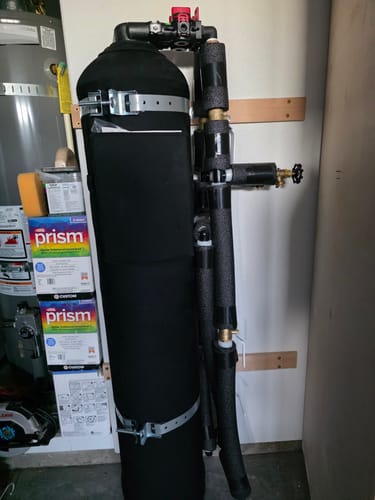
What drew me to SoftPro's upflow catalytic carbon system was the dual-media approach. The catalytic carbon handles chlorine and chloramines more effectively than standard activated carbon, while the bone char specifically targets fluoride removal. For a Phoenix homeowner dealing with heavily treated municipal water, this combination made perfect sense.
The upflow design was another selling point. Unlike downflow systems where water pressure can compact the media over time, upflow systems allow the carbon bed to expand during operation, maximizing contact time and preventing channeling. This translates to more consistent performance and longer media life.
I also appreciated that this wasn't a proprietary cartridge system. The unit uses bulk media that can be replaced as needed, giving me control over maintenance costs and timing. After calculating the long-term expenses, this approach would save us hundreds compared to whole-house cartridge systems.
Unboxing and Initial Setup Challenges
When the system arrived, I was immediately impressed by the build quality. The main tank is a genuine Structural fiberglass vessel – not the cheaper plastic tanks some competitors use. At 10" x 54", it's substantial but not overwhelming in our utility room.
The Clack WS1 control valve came pre-mounted and programmed, which saved considerable setup time. However, I did need to adjust the backwash settings for our specific water pressure and flow requirements. The manual was comprehensive, though I wished it had more visual diagrams for the plumbing connections.
One surprise was the media weight – about 60 pounds of catalytic carbon and bone char combined. This isn't a system you're moving around once it's installed. Make sure you have adequate floor support and easy access for future maintenance.
Installation Reality Check and Carbon Flushing

Here's where my experience mirrors the original reviewer's observation: installation is straightforward, but the initial flushing process requires patience and preparation.
I strongly recommend disconnecting water lines before every faucet, including toilet supply lines, for the initial carbon flushing phase.
This might sound excessive, but carbon fines will work their way through your entire plumbing system during the first few days of operation.
I learned this lesson the hard way. Despite running the initial backwash cycle as instructed, carbon particles still migrated through our lines. The kitchen faucet aerator clogged completely, and I had to disassemble our bathroom faucets to clear carbon debris from the internal screens.
The flushing process took about 45 minutes of continuous flow to clear most visible carbon particles. Even then, I ran water for several minutes at each fixture before reconnecting appliances. This preparation phase is critical – don't rush it, or you'll be dealing with clogged aerators and appliance filters for weeks.
Professional installation would have cost around $400-500 in our area, but the process is definitely DIY-friendly if you're comfortable with basic plumbing. The most challenging aspect was positioning the system to maintain adequate clearance for the control valve and ensuring Check over here proper drain line routing.
Performance Results After Six Months of Use
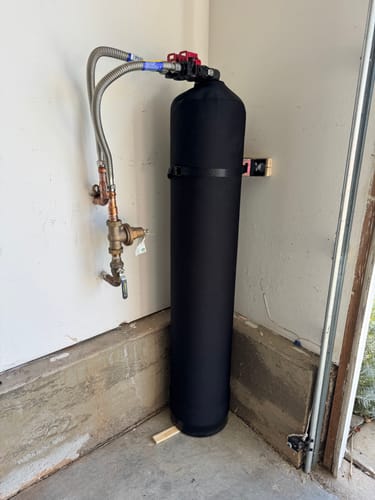
The transformation in our water quality has been remarkable, though not instantaneous. Here's what I've measured and observed:
Chlorine Removal: Using DPD test strips, incoming chlorine levels of 2.8 ppm dropped to undetectable levels (below 0.1 ppm) within the first week. The chlorine smell disappeared completely – no more chemical odors in the bathroom after showers.
Fluoride Reduction: This was harder to test at home, but I sent samples to a local lab after three months. Incoming fluoride at 0.9 ppm reduced to 0.2 ppm – about a 75% reduction. The bone char media is performing as expected for fluoride adsorption.
Taste and Odor: The improvement here was immediate and dramatic. Our coffee tastes noticeably cleaner, and we've completely stopped buying bottled water for drinking. Even guests comment on how good our tap water tastes compared to typical Phoenix water.
Skin and Hair: My wife noticed softer hair within two weeks, and both of us experience less skin dryness after showering. While this system doesn't soften water like a salt-based softener would, removing chlorine makes a noticeable difference in how water feels.
Flow rate through the system maintains excellent pressure. At 7 GPM (our peak household demand), I measure only a 2-3 PSI pressure drop across the filter – barely noticeable during normal use.
Maintenance Reality and Operating Costs
The system automatically backwashes every 7 days, consuming about 35 gallons per cycle. In Phoenix, this adds roughly $8-10 monthly to our water bill – a small price for the consistent performance.
Media replacement is the significant long-term cost consideration.
The catalytic carbon should last 3-5 years depending on chlorine levels and water usage, while bone char typically needs replacement every 2-3 years for optimal fluoride removal.
Replacement media costs approximately $180 for catalytic carbon and $120 for bone char – about $300 total for a complete refresh. Compared to our previous bottled water expenses ($720 annually), this system pays for itself quickly.
The only routine maintenance involves annual inspection of the control valve and occasional cleaning of the brine line fitting. The Clack valve has proven reliable with no adjustments needed since installation.
I do recommend installing a sediment pre-filter if your area has high particulate levels. While not strictly necessary, it extends the life of the more expensive catalytic carbon media.
Honest Limitations and Considerations
No system is perfect, and this one has some limitations worth understanding:
Space Requirements: The 54" tank height requires adequate clearance for media replacement. Our 8-foot utility room ceiling provides enough space, but measure carefully if you're working with limited height.
Initial Investment: At around $1,200-1,500 depending on configuration, this isn't an impulse purchase. However, the long-term value proposition is solid when you factor in media longevity and performance consistency.
Not a Water Softener: This system doesn't address hard water minerals. Phoenix water averages 12-15 grains hardness, so we still deal with some mineral spotting on glass and fixtures. A separate softener would be needed for complete mineral removal.
Fluoride Removal Isn't 100%: While bone char significantly reduces fluoride, it's not as effective as reverse osmosis for complete removal. If zero fluoride is your goal, RO might be necessary.
The backwash cycle does create some noise – not loud, but noticeable if the system is near living spaces. Ours is in the utility room, so this isn't an issue, but consider placement carefully.
Final Verdict and Recommendations
After six months of daily use, I'm genuinely satisfied with this investment. The SoftPro catalytic carbon system delivers on its primary promises: excellent chlorine removal, significant fluoride reduction, and dramatically improved taste and odor.
This system excels for homeowners dealing with heavily chlorinated municipal water who want fluoride reduction without the complexity of reverse osmosis.
The upflow design and quality components suggest this will provide reliable service for many years.
Who should consider this system?
If you're on municipal water with chlorine/chloramine treatment, want to reduce fluoride intake, and prefer a set-and-forget maintenance approach, this is an excellent choice. The initial investment is significant, but the long-term value is solid.
Who might want alternatives?
If you need comprehensive mineral removal (water softening), have severe iron or sulfur issues, or require 99% contaminant removal, specialized systems might serve you better.
Would I purchase this system again? Absolutely. The combination of performance, reliability, and reasonable operating costs makes it a smart long-term investment in our home's water quality. Just remember to budget time for proper initial flushing – it's worth the effort for years of clean, great-tasting water.